
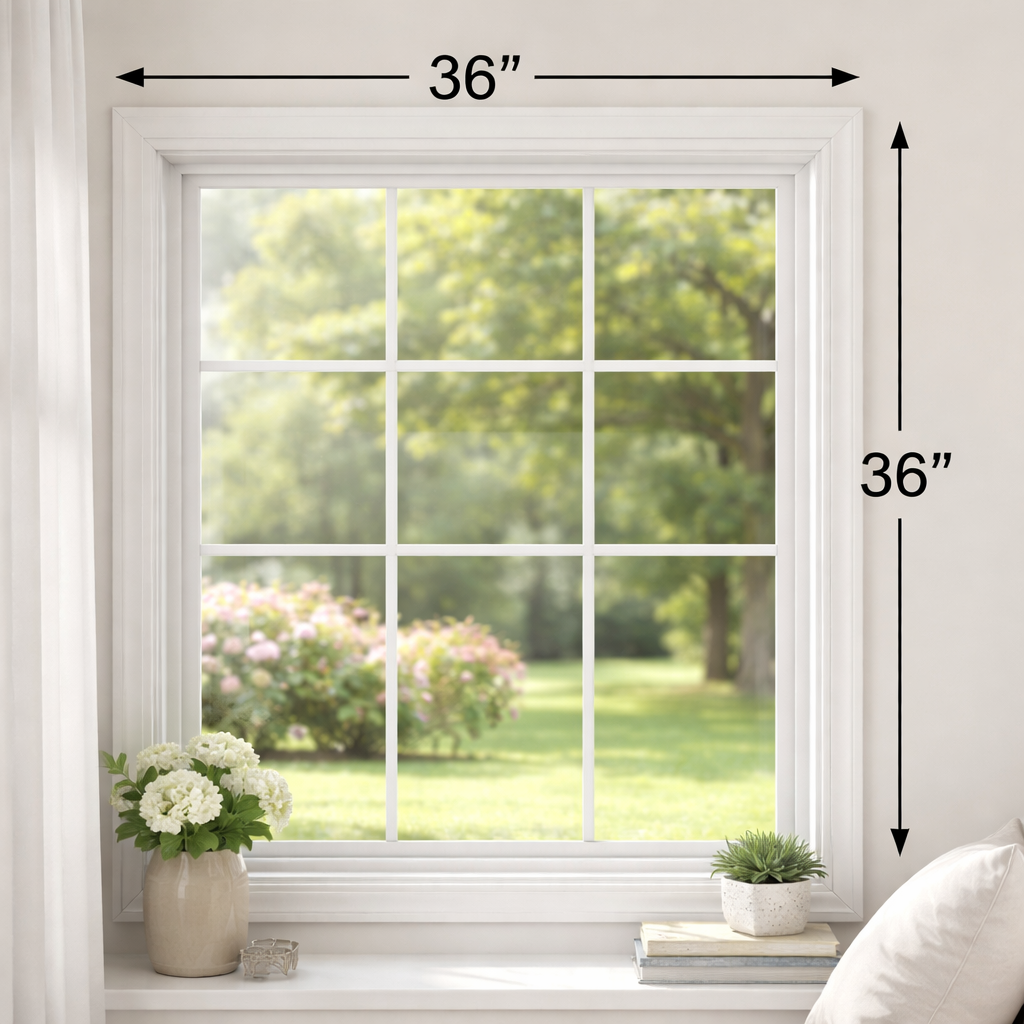
When planning a home renovation or new construction, one common question homeowners ask is: “Is 36×36 a standard window size?” The short answer is yes, but there are some important details to know to ensure proper fit, style, and functionality. This guide will help you understand why 36×36 inches is considered standard, its common applications, and tips for choosing the right window size for your space.
Understanding Window Sizes
Window sizes in the U.S. are typically measured in inches, showing width first, height second. So a 36×36 window is 36 inches wide and 36 inches tall, making it a square window.
Standard window sizes usually follow nominal dimensions, which may differ slightly from the actual frame size to allow for installation within a rough opening. For example, a 36×36 window often fits into a rough opening slightly larger than 36 inches in both directions.
Is 36×36 Considered Standard?
Yes, 36×36 inches is a standard window size. It falls within the common ranges for typical windows:
- Width: 24–48 inches
- Height: 36–72 inches
A 36×36 window is often used in:
- Bedrooms – providing symmetry and natural light
- Bathrooms – for ventilation and privacy with frosted glass
- Kitchens – as a centered or decorative window
- Living areas – as a square accent or picture window
Because it is a square shape, a 36×36 window is also very popular for modern and contemporary home designs, where geometric balance is desired.
Discover more:
Is 34×58 a Standard Window Size?
Is 36×60 a Standard Window Size?
Is 24×36 a Standard Window Size?
Casement Window Dimensions – A Complete Guide
Sliding Window Sizes – A Complete Guide
Common Window Types for 36×36
Several types of windows are commonly available in 36×36 sizes:
- Single-Hung or Double-Hung Windows
- The bottom or both sashes move vertically
- Classic look for many homes
- Allows for ventilation without a large footprint
- Casement Windows
- Hinged on the side and open outward
- Ideal for maximum airflow
- Works well as a square window above counters or seating areas
- Fixed or Picture Windows
- Do not open
- Perfect for letting in light or framing an outdoor view
- Often combined with other operable windows for style and function
Standard Window Size Chart
Here is a handy chart of standard window sizes commonly available in the U.S., including square, vertical, and horizontal configurations:
| Window Type | Width (inches) | Height (inches) | Notes |
|---|---|---|---|
| Square Windows | 24×24 | 24×24 – 48×48 | Popular for small rooms or accents |
| 36×36 | 36 | 36 | Standard square window for bedrooms, bathrooms, kitchens |
| Vertical Single-Hung / Double-Hung | 24–36 | 36–72 | Most common in bedrooms and living rooms |
| Casement / Awning | 24–48 | 36–72 | Opens outward, ideal for ventilation |
| Horizontal Sliding | 36–72 | 24–36 | Great for wide openings with limited height |
| Picture / Fixed | 24–72 | 24–72 | Non-operable, used for natural light or views |
| Bay / Bow Windows | Custom | Custom | Combines multiple windows into one unit |
Conclusion
In summary, 36×36 inches is a standard and widely used window size. Its square shape offers versatility, aesthetic balance, and compatibility with a variety of window types. Whether you are renovating, replacing, or designing a new home, understanding standard window sizes like 36×36 helps ensure a seamless fit and functional design.
For expert advice or more information about window sizes and options, feel free to contact us at wang@gddlsn.com.