
The most common residential garage door widths in the United States are 8 and 9 feet for single-car doors and 16 feet for double-car doors. Wider options, including 10-foot single doors and 18-foot double doors, are also available. The right width depends on your vehicle size, driveway approach, parking needs, and available installation space. Understanding these dimensions before ordering can help you choose a garage door that fits your property and provides enough clearance for everyday use.
What Is the Standard Garage Door Width?
There is no single standard width for every garage door. Residential garage doors are manufactured in several common sizes to accommodate different vehicles, garage layouts, and architectural requirements.
The following table summarizes common US residential garage door dimensions.
| Garage Door Type | Common Width | Common Height |
|---|---|---|
| Single-car garage door | 8 ft | 7 ft |
| Single-car garage door | 9 ft | 7 ft |
| Single-car garage door | 10 ft | 7–8 ft |
| Double-car garage door | 16 ft | 7–8 ft |
| Wide double-car garage door | 18 ft | 7–8 ft |
These are typical configurations rather than universal building standards. Actual availability varies by manufacturer, product line, and installation requirements. Custom widths may also be available for older homes, larger vehicles, and nonstandard openings.
For many homeowners, an 8-foot or 9-foot single door is a practical starting point. A 16-foot double door is a common choice for two-car garages, while a wider opening can provide additional maneuvering room.
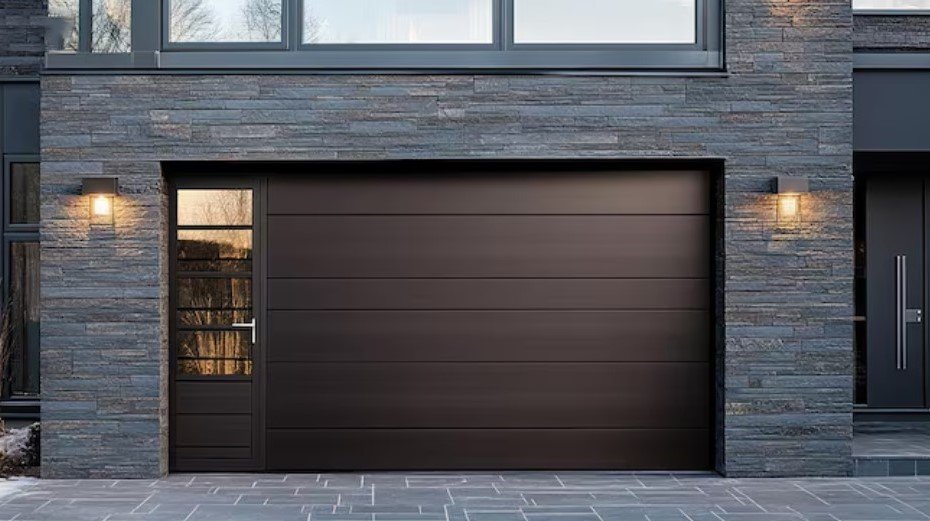
Single Garage Door Width: 8 Feet vs. 9 Feet vs. 10 Feet
Single garage doors are commonly available in widths of 8, 9, and 10 feet. Although these sizes may appear similar, the extra clearance can make a noticeable difference when parking and getting in and out of a vehicle.
8-Foot Garage Door
An 8-foot-wide garage door is a common choice for traditional residential garages and narrower openings.
It may work well for a compact car or a typical passenger vehicle when the driveway approach is straight and the surrounding space is sufficient.
However, the opening can feel restrictive if you drive a wider SUV or pickup truck, especially when you need to account for side mirrors or approach the garage at an angle.
Best for: Compact cars, narrower existing openings, and garages where structural space is limited.
9-Foot Garage Door
A 9-foot-wide garage door provides one additional foot of clearance compared with an 8-foot door.
That extra width can make it easier to enter the garage, correct your parking position, and avoid scraping the sides of the vehicle against the door frame.
For a new single-car garage, a 9-foot opening is often worth considering when the building layout allows it.
Best for: Everyday passenger vehicles, many small and midsize SUVs, and homeowners who want more comfortable entry clearance.
10-Foot Garage Door
A 10-foot-wide garage door offers additional maneuvering room for wider vehicles or garages with a more challenging driveway approach.
It may also be useful when the garage serves as a workshop or storage area and you want more flexibility when moving equipment through the opening.
A wider door does not automatically make a garage suitable for every large vehicle. Interior width, ceiling height, parking depth, and the vehicle’s actual dimensions still matter.
Best for: Larger vehicles, generous single-bay garages, and projects where comfortable access is a priority.
Double Garage Door Width: Is 16 Feet Enough for Two Cars?
A 16-foot-wide garage door is one of the most common options for a two-car garage. It allows two vehicles to enter through one large opening rather than requiring separate doors.
For many households, a 16-foot door is sufficient for two passenger cars or a combination of smaller vehicles. However, the available space can feel tight when both vehicles are wide SUVs or full-size pickup trucks.
The key distinction is between fitting two vehicles inside the garage and comfortably driving both vehicles through the opening.
Consider these factors before selecting a double garage door:
- Vehicle width: Measure each vehicle at its widest point, including mirrors when they are extended.
- Parking clearance: Allow room for both vehicles to enter without excessive steering corrections.
- Interior garage width: A wide door cannot compensate for a narrow garage interior.
- Door-opening space: Drivers need enough room to open vehicle doors after parking.
- Future needs: Consider whether you may replace a compact car with a larger SUV or truck.
16-Foot vs. 18-Foot Double Garage Doors
| Feature | 16-Foot Door | 18-Foot Door |
|---|---|---|
| Typical use | Standard two-car garage | Wider two-car garage |
| Entry clearance | Adequate for many households | Provides additional clearance |
| Space for wider vehicles | Depends on vehicle and approach | More forgiving in many layouts |
| Exterior appearance | Common residential proportion | Wider visual opening |
| Installation requirements | Depends on the existing opening | May require a larger structural opening |
An 18-foot door can make entering and exiting more comfortable, but it requires a suitable opening and enough structural space. If the garage already exists, measure the framing before assuming a wider replacement door will fit.
One Double Garage Door vs. Two Single Garage Doors
A two-car garage can have one wide double door or two separate single doors. Both configurations have practical advantages.
| Consideration | One Double Door | Two Single Doors |
|---|---|---|
| Appearance | One broad opening | Two separate openings |
| Independent access | Both vehicles share one door | Each vehicle has its own door |
| Door operation | One opener typically serves the door | Two openers may be needed |
| When one door fails | Both vehicles may be affected | The other opening may remain usable |
| Installation | Requires a wide opening and suitable structure | Requires two openings and appropriate framing |
| Design flexibility | Creates a continuous facade feature | Can balance the front elevation |
One double door can create a clean, unified appearance and simplify access to the garage. Two single doors provide independent operation and may suit homes where separate openings better complement the exterior design.
Neither option is universally better. Consider the garage’s framing, the cost of the door and opener systems, the exterior appearance, and how the vehicles are used.
How Wide Should a Garage Door Be for an SUV or Truck?
Choosing a garage door based only on the vehicle’s advertised width can lead to a poor fit. The width of the vehicle body is only one part of the calculation.
For a more accurate assessment, consider:
1. Measure the Vehicle at Its Widest Point
Check the manufacturer’s vehicle specifications and measure the actual vehicle if necessary. Include extended side mirrors when assessing the space needed to drive through the opening.
Foldable mirrors may reduce the required clearance temporarily, but having to fold them every time you enter the garage may be inconvenient.
2. Consider the Driveway Approach
A vehicle approaching a garage at an angle needs more maneuvering room than one approaching a straight, unobstructed opening.
A narrow driveway, nearby wall, fence, or parked vehicle can make an otherwise adequate door feel too small.
3. Allow for Parking and Exit Clearance
Once the vehicle is inside, you still need room to walk around it and open the doors.
Check the garage’s interior width, the distance between parked vehicles, and the space between each vehicle and the side walls.
4. Consider Future Vehicles
If you plan to replace a sedan with a full-size truck or larger SUV, it may be worth selecting a wider opening during new construction.
For an existing garage, however, widening the door can involve structural work. Confirm the feasibility and cost before committing to a larger size.
Garage Door Width in Inches
Garage door widths are commonly listed in feet, but measurements in inches are useful when comparing specifications and measuring an existing opening.
| Width in Feet | Width in Inches |
|---|---|
| 6 ft | 72 in |
| 8 ft | 96 in |
| 9 ft | 108 in |
| 10 ft | 120 in |
| 12 ft | 144 in |
| 14 ft | 168 in |
| 15 ft | 180 in |
| 16 ft | 192 in |
| 18 ft | 216 in |
These conversions are exact. They do not indicate that every width is available for every residential door model.
For nonstandard openings, ask the manufacturer or installer which nominal and custom sizes are supported by the selected door system.
Garage Door Width vs. Rough Opening Width vs. Clear Opening Width
These measurements are related, but they do not always refer to the same dimension.
Garage Door Width
The listed or nominal door width is the product size specified by the manufacturer. The exact definition should be confirmed in the product documentation, especially when comparing different door systems.
Rough Opening Width
The rough opening is the framed opening prepared to receive the garage door assembly. For many overhead garage door installations, manufacturers specify a rough opening that corresponds to the nominal door dimensions. However, the framing, jamb requirements, and installation details must follow the selected system’s instructions.
Do not assume that every door requires the same opening dimensions.
Clear Opening Width
The clear opening is the usable space available for a vehicle to pass through. Tracks, frames, seals, and other components may reduce the effective passage width depending on the door design and installation.
This is especially important when evaluating an older garage or a specialized door system.
Before ordering, confirm which dimension the manufacturer is quoting and which dimension the installer needs. Confusing these measurements can result in a door that does not fit the opening or provides less clearance than expected.
How to Measure Garage Door Width
Accurate measurements are essential when replacing a garage door or planning a new installation.
For an existing garage, begin by recording the following dimensions.
Step 1: Measure the Opening Width
Measure horizontally between the inside edges of the finished structural opening.
Take measurements near the top, middle, and bottom. If the measurements differ, record each value and investigate whether the opening is out of square.
Do not automatically order a door based on the smallest or largest measurement without checking the manufacturer’s requirements.
Step 2: Measure the Opening Height
Measure vertically from the finished floor to the top of the opening on both sides and near the center.
Although this guide focuses on width, height affects vehicle clearance and the door system’s overall fit.
Step 3: Measure the Side Room
Side room is the available space beside the opening for vertical tracks, brackets, and other hardware.
Measure both sides separately. The required space depends on the door and spring system, so consult the installation specifications rather than relying on a universal clearance figure.
Step 4: Measure the Headroom
Headroom is the space above the opening required for the door’s upper section, tracks, springs, and related hardware.
If you plan to install an automatic opener, check whether the opener needs additional clearance.
Step 5: Measure the Backroom
Backroom is the distance from the garage door opening toward the rear wall of the garage.
Overhead doors need space to travel along their tracks when open. The required distance varies by door height, track configuration, and opener arrangement.
Step 6: Check for Obstructions
Look for lights, beams, pipes, storage racks, shelving, and other obstacles that may interfere with the door or its hardware.
If the opening is not square or the available clearance is limited, have the installation requirements assessed before ordering.
For a new garage, coordinate the door width with the framing, structural support, driveway layout, and planned vehicle dimensions.
How Garage Door Type Affects Width
Different garage door types operate in different ways, which affects the space needed for installation. The nominal door width alone does not determine whether a particular system will fit.
Sectional Garage Doors
Sectional doors consist of hinged panels that move along tracks. They are common in residential garages and generally need overhead space for the door to open.
Check the track arrangement, side room, headroom, and backroom when evaluating the opening.
Roller Garage Doors
Roller doors coil into a compact roll above the opening. Depending on the design, they may be useful where overhead space is restricted.
However, the curtain, guides, and roll housing still require space. Confirm the manufacturer’s dimensions and the clear opening after installation.
Up-and-Over Garage Doors
Up-and-over doors typically move as one large panel. The operating mechanism and frame arrangement can affect the required installation space and usable opening.
When replacing this type of door, distinguish between the nominal door size, frame dimensions, and actual passage width.
The best door type depends on the available space, insulation needs, operation, security, and the existing structure. A suitable width must be considered alongside these requirements.
When Should You Choose a Custom Garage Door Width?
Standard sizes suit many homes, but custom dimensions can be useful when a typical door does not meet the project’s needs.
Consider a custom-width garage door if:
- The existing opening is an unusual size.
- You are building a new garage for wider vehicles.
- The property has architectural constraints.
- You need a wider opening for workshop equipment.
- The existing framing cannot accommodate a standard product without modification.
Custom manufacturing can help match the door to the available opening, but it does not eliminate the need to check structural requirements and installation clearances.
If a wider door requires changing the opening, consult a qualified contractor or structural professional to determine whether the wall, header, and supporting structure can accommodate the modification.
FAQs
What is the most common garage door width?
Common US residential widths include 8 and 9 feet for single-car doors and 16 feet for double-car doors. Other widths are available depending on the manufacturer and garage layout.
Is an 8-foot garage door wide enough?
An 8-foot door may work well for a compact car or passenger vehicle with a suitable driveway approach. A 9-foot or wider opening can provide more maneuvering room, particularly for larger vehicles.
Is a 16-foot garage door wide enough for two cars?
A 16-foot door is a common choice for two-car garages and can accommodate many combinations of passenger cars and smaller SUVs. Two wide vehicles may require more careful positioning, so consider the actual vehicle dimensions and available interior space.
Can I install an 18-foot garage door in an existing garage?
Possibly, but the existing structural opening must be wide enough or capable of being modified. Check the header, side supports, framing, and selected door system before making changes.
What is the difference between an 8-foot and a 9-foot garage door?
A 9-foot door provides 12 inches more width than an 8-foot door. This additional clearance can make driving in and out easier, particularly when the approach is not perfectly straight.
Does garage door width include the frame?
Not necessarily. Product dimensions, frame dimensions, and rough opening requirements vary by door type and manufacturer. Confirm the terminology in the product specifications before ordering.
Can a garage door be wider than 18 feet?
Yes. Some manufacturers offer larger or custom residential doors, although availability depends on the model and application. Very wide doors may require additional consideration of structural support, hardware, and operating systems.
Should I measure the old door or the opening?
Measure the opening as well as the existing door, and record the installation clearances. The old door’s dimensions alone may not provide enough information to select a replacement correctly.
Conclusion
For many US homes, 8- or 9-foot single garage doors and 16-foot double garage doors are useful starting points. The right width ultimately depends on your vehicles, driveway approach, interior parking space, and installation requirements. Measure the opening carefully, confirm the manufacturer’s specifications, and consider future vehicle needs before ordering.
Need a garage door solution tailored to your project? Email us at wang@gddlsn.com to discuss your required width, dimensions, and customization options.