
Retractable window screens come in several configurations, including vertical, horizontal, manual, motorized, and integrated systems. The right type depends mainly on the window design, opening size, available mounting space, frequency of use, and desired level of convenience.
Unlike fixed screens that remain in place, retractable screens can move out of the opening when they are not needed. This makes them particularly useful for windows where maintaining clear views, natural light, or a clean architectural appearance is important.
This guide explains the main types of retractable window screens, their compatible window styles, mesh options, and the factors to consider when selecting a system.
What Are Retractable Window Screens?
A retractable window screen is a screen system that can be extended across a window opening when ventilation or insect protection is needed and retracted into a housing when it is not.
A typical system consists of:
- Screen mesh
- Retractable housing or cassette
- Guide tracks
- Pull bar or handle
- Spring or tension mechanism
- Optional motor and control system
When the screen is opened, the mesh moves across the window and is held in position by the guide system. When it is no longer required, the mesh rolls, folds, or retracts into its housing.
This design provides a major difference from conventional fixed window screens: the screen does not have to remain visible when the window is being used without it.

Main Types of Retractable Window Screens
Retractable window screens can be classified according to their retraction direction, operating method, and installation configuration.
The most common options are vertical, horizontal, manual, motorized, and integrated retractable screens.
1. Vertical Retractable Window Screens
Vertical retractable screens move up and down across the window opening.
The mesh is typically stored inside a housing positioned along the top of the window. When needed, the screen is pulled downward and secured at the bottom.
Best for:
- Tall windows
- Single-hung windows
- Double-hung windows
- Windows with limited side clearance
- Openings where horizontal movement is impractical
Advantages:
- Minimal side clearance required
- Compact appearance
- Convenient for vertically oriented openings
- Screen remains hidden when retracted
Considerations:
The top housing requires sufficient mounting space. The system must also maintain appropriate tension throughout the opening to keep the mesh properly positioned.
2. Horizontal Retractable Window Screens
Horizontal retractable screens move from one side of the window opening to the other.
The mesh is normally stored inside a vertical side cassette and pulled across the opening along guide tracks.
Best for:
- Wide windows
- Sliding windows
- Casement windows
- Large horizontal openings
- Windows with limited space above the frame
Advantages:
- Works well with wide openings
- Convenient side-to-side operation
- Suitable for many casement and sliding window configurations
- Allows the screen to disappear into a side housing
Considerations:
The side cassette and guide tracks require adequate clearance. The sill and surrounding frame should also provide a suitable surface for installation.
3. Manual Retractable Window Screens
Manual retractable screens use physical movement rather than a motor.
Depending on the design, the user may operate the screen using a pull bar, handle, spring mechanism, or similar manual system.
Best for:
- Standard residential windows
- Frequently accessible windows
- Smaller openings
- Projects where simplicity and cost control are priorities
Advantages:
- Simple operation
- No electrical connection required
- Lower system complexity
- Generally lower initial cost
- Easy to operate for standard openings
Manual systems are often sufficient when the window is easy to reach and the screen does not need to be operated frequently.
4. Motorized Retractable Window Screens
Motorized retractable screens use an electric motor to extend and retract the mesh.
Depending on the system, operation may be controlled through:
- Wall switches
- Remote controls
- Automated controls
- Smart-home systems
Best for:
- Large windows
- Oversized openings
- High windows
- Hard-to-reach windows
- Frequently operated screens
- High-end residential and architectural projects
Advantages:
- Convenient operation
- Suitable for larger screens
- Better accessibility
- Can be integrated into automated environments
- Reduces the physical effort required to operate large screens
The main trade-offs are higher cost, greater system complexity, and additional electrical or control requirements.
5. Integrated Retractable Window Screens
Integrated systems are designed as part of the overall window or door system rather than being added as a separate screen afterward.
The screen housing may be incorporated into the frame or surrounding structure.
Best for:
- New construction
- Custom window systems
- Modern architectural projects
- Projects where a highly integrated appearance is important
Advantages:
- Clean appearance
- Reduced visual clutter
- Better coordination with the window frame
- Easier planning during new construction
For replacement projects, however, the existing frame and available installation space may limit whether an integrated system can be used.
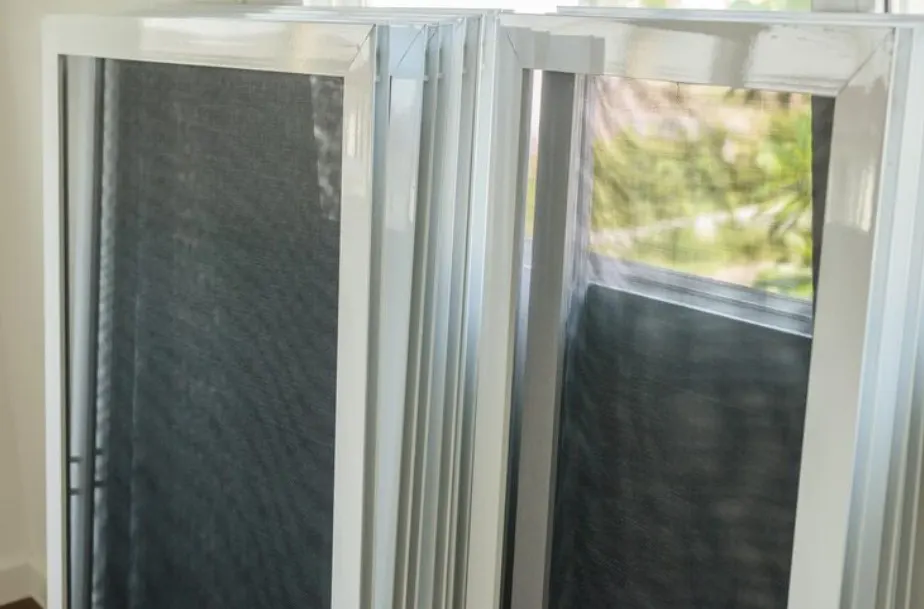
Retractable Window Screens by Window Type
Choosing a retractable screen based only on the screen itself is not enough. The window configuration should be one of the first factors considered.
Different window styles open in different directions and have different hardware clearances.
| Window Type | Common Retractable Screen Option | Main Consideration |
|---|---|---|
| Casement window | Horizontal | Crank and handle clearance |
| Sliding window | Horizontal | Opening width and track |
| Single-hung window | Vertical | Sash movement and frame depth |
| Double-hung window | Vertical | Sash operation |
| Awning window | Vertical or custom | Operator clearance |
| Large architectural window | Motorized/custom | Overall dimensions |
| Fixed window | Custom | Installation space |
The exact configuration depends on the window frame, opening dimensions, hardware, and mounting location.
Retractable Screens for Casement Windows
Casement windows are an important application for retractable screens because the window sash typically opens outward.
A traditional fixed screen may interfere with the operation of the window or require a separate installation arrangement.
A retractable system can instead be positioned so that the screen is deployed when ventilation is needed and retracted when the window is used without the screen.
Important considerations include:
- Window crank location
- Handle clearance
- Interior mounting depth
- Screen housing position
- Opening direction
- Frame dimensions
For casement windows, a horizontal retractable system is often worth considering because the screen can move across the opening without interfering with the outward-opening sash.
However, the actual configuration should always be determined from the window design and available mounting space.
Retractable Screens for Sliding Windows
Sliding windows typically work well with horizontal retractable screens because the screen can move laterally across the opening.
When selecting a system, check:
- Overall opening width
- Frame depth
- Sill configuration
- Track position
- Available side clearance
For particularly wide sliding windows, the screen size and operating mechanism become increasingly important.
A manual screen may be suitable for a moderate opening, while larger or frequently used openings may benefit from a motorized configuration.
Retractable Screens for Single-Hung and Double-Hung Windows
Hung windows move vertically, so vertical retractable screens are often a natural configuration.
The main consideration is whether the screen system can be installed without interfering with:
- Window sash movement
- Locks
- Handles
- Existing frame components
Frame depth is also important because the retractable housing and guide components must have sufficient mounting space.
Retractable Screens for Large Windows
Large architectural windows create different requirements from standard residential windows.
As opening dimensions increase, consider:
- Maximum screen width
- Maximum screen height
- Mesh weight
- Retraction force
- Guide-track stability
- Manual operating effort
- Motorization
For oversized openings, motorized systems may provide a more practical operating solution.
However, the maximum dimensions should always be verified against the specific screen system rather than assuming that any retractable screen can cover any opening.
How to Choose the Right Retractable Window Screen
The best retractable screen is not necessarily the most advanced or expensive option. It should match the window, opening, and intended use.
A practical selection process starts with seven questions.
1. What Type of Window Is It?
First identify whether the opening uses a:
- Casement window
- Sliding window
- Single-hung window
- Double-hung window
- Awning window
- Fixed window
This determines the practical direction and mounting configuration.
2. Should the Screen Retract Vertically or Horizontally?
As a general rule:
Choose vertical retraction when the opening is better suited to top-to-bottom movement.
Choose horizontal retraction when the opening is wider or requires side-to-side operation.
The available mounting space is just as important as the window dimensions.
3. How Large Is the Opening?
Measure:
- Width
- Height
- Mounting depth
- Available side clearance
- Available top clearance
For custom or oversized windows, confirm the manufacturer’s maximum recommended dimensions before selecting the system.
4. How Frequently Will the Screen Be Used?
A window that needs a screen several times a day may benefit from a smoother or motorized operating system.
For occasional use, a manual retractable screen may provide sufficient functionality without unnecessary complexity.
5. Is Manual or Motorized Operation More Appropriate?
| Factor | Manual | Motorized |
|---|---|---|
| Initial cost | Lower | Higher |
| Operation | Hand-operated | Motorized |
| Electricity | Not required | Required |
| Large openings | More challenging | Better suited |
| High windows | Less convenient | More convenient |
| Automation | Limited | Available |
| System complexity | Lower | Higher |
For standard, easily accessible windows, manual operation is often practical.
For large, high, or difficult-to-reach openings, motorization can provide a more convenient solution.
Retractable Window Screen Mesh Options
The retractable mechanism determines how the screen operates, but the mesh determines much of its functional performance.
Common mesh options include:
| Mesh Type | Best For | Primary Consideration |
|---|---|---|
| Fiberglass mesh | General applications | Cost and everyday insect protection |
| Polyester mesh | Flexible applications | Flexibility and durability |
| Pet-resistant mesh | Homes with pets | Improved resistance to scratching |
| Solar mesh | Sunny areas | Solar heat and glare control |
| Privacy mesh | Privacy-focused spaces | Reduced visibility |
The appropriate mesh depends on the primary purpose of the screen.
A screen intended mainly for insect protection does not necessarily require the same mesh as one intended to reduce solar exposure or provide greater resistance to pets.
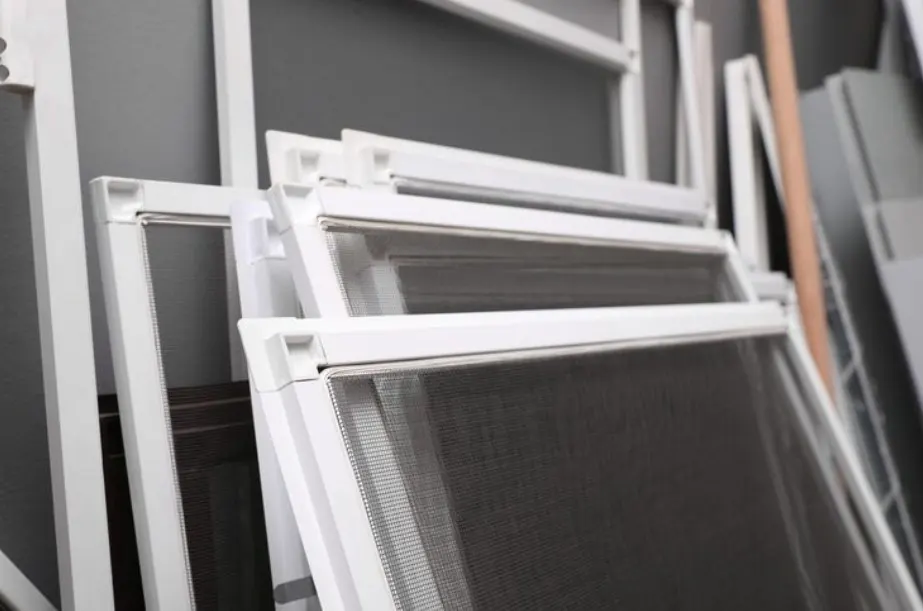
Standard vs Custom Retractable Window Screens
Standard retractable screens work well when the window opening falls within common system dimensions.
Custom screens become more useful when a project involves:
- Unusual window dimensions
- Oversized openings
- Non-standard frame configurations
- Limited mounting space
- Special mesh requirements
- Architectural window systems
Customization may involve:
- Screen width
- Screen height
- Housing dimensions
- Track configuration
- Mesh selection
- Frame finish
- Operating method
For manufacturers and architectural projects, it is particularly important to consider the screen and window as a complete system rather than selecting the screen based solely on nominal opening dimensions.
What to Check Before Ordering Retractable Window Screens
Before selecting or specifying a retractable screen, check these factors:
Window configuration
Determine how the window opens and where the screen can be positioned.
Opening dimensions
Measure the actual width and height rather than relying only on nominal window sizes.
Mounting depth
Make sure there is enough space for the housing and tracks.
Hardware clearance
Check handles, locks, cranks, operators, and other components.
Retraction direction
Determine whether vertical or horizontal movement is more appropriate.
Screen size
Verify that the required opening falls within the system’s recommended dimensions.
Mesh requirements
Select the mesh based on insect protection, durability, solar control, privacy, or other project requirements.
Operating method
Choose manual or motorized operation based on accessibility, opening size, and frequency of use.
Retractable Window Screens: Which Type Is Right for You?
The choice can be simplified by matching the screen configuration to the application.
| Requirement | Recommended Option |
|---|---|
| Standard residential window | Manual retractable screen |
| Tall window | Vertical retractable screen |
| Wide window | Horizontal retractable screen |
| Casement window | Horizontal/custom system |
| Sliding window | Horizontal retractable screen |
| High window | Motorized retractable screen |
| Large architectural opening | Motorized/custom system |
| Pet-friendly application | Pet-resistant mesh |
| Strong sun exposure | Solar mesh |
| New construction | Integrated system |
The table provides a starting point rather than a universal specification. Actual compatibility depends on the window frame, dimensions, hardware, and mounting conditions.
FAQs
1. What are the main types of retractable window screens?
The main types include vertical, horizontal, manual, motorized, and integrated retractable screens. They can also be categorized according to the window type they are designed to accommodate.
2. Are retractable screens suitable for casement windows?
Yes. Retractable screens can be used with casement windows, particularly when the screen is positioned to avoid interference with the outward-opening sash and window hardware. Horizontal configurations are often suitable, but the exact installation depends on the window design.
3. Are horizontal or vertical retractable screens better?
Neither is universally better. Horizontal systems are generally well suited to wide openings and many sliding or casement windows, while vertical systems are often suitable for taller openings and hung windows.
4. Are motorized retractable screens worth it?
Motorized systems can be worthwhile for large, high, frequently used, or difficult-to-reach windows. For smaller, easily accessible windows, manual systems may provide sufficient functionality at a lower cost.
5. Can retractable window screens be custom-sized?
Yes. Custom retractable screens can be designed for non-standard openings, oversized windows, unusual frame configurations, and specific mounting requirements, depending on the manufacturer’s system capabilities.
6. What type of mesh is best for retractable window screens?
There is no single best mesh. Fiberglass is suitable for general insect protection, pet-resistant mesh is useful where durability is important, and solar or privacy mesh can be selected when additional performance is required.
7. How do I choose a retractable window screen?
Start with the window type and opening dimensions, then consider retraction direction, mounting space, operating method, frequency of use, mesh requirements, and whether a standard or custom system is appropriate.
Conclusion
Retractable window screens are available in several configurations, but selecting the right one starts with the window rather than the screen. Window type, opening dimensions, mounting space, operating direction, and frequency of use all influence the appropriate system.
For standard openings, a manual vertical or horizontal screen may be sufficient. Large, high, or architecturally complex openings may benefit from motorized or custom solutions, while different mesh options can address specific requirements such as pet resistance, solar control, or privacy.
The goal is not simply to choose the most advanced retractable screen, but to select a system that fits the window configuration, dimensions, and intended application.
Planning a new window project? Email wang@gddlsn.com to discuss custom aluminum windows, screen-compatible designs, and tailored window solutions for your project.