
Single-hung windows are generally the more cost-effective option, while double-hung windows offer greater ventilation flexibility and easier cleaning. The better choice depends on where the window will be installed, how much ventilation is needed, how easily it can be accessed, and the overall project budget. Both window types can provide effective performance when properly specified and installed.
Single-Hung vs. Double-Hung Windows: What’s the Difference?
The main difference is simple: how many sashes can move.
| Feature | Single-Hung Window | Double-Hung Window |
|---|---|---|
| Upper sash | Fixed | Operable |
| Lower sash | Operable | Operable |
| Ventilation | Lower sash only | Upper, lower, or both |
| Cleaning | More limited | Easier from inside |
| Cost | Generally lower | Generally higher |
| Best suited for | Cost-conscious and easy-access locations | Ventilation and hard-to-reach locations |
A single-hung window has one fixed upper sash and one operable lower sash. A double-hung window has two operable sashes that can move independently.
What Is a Single-Hung Window?
A single-hung window has a fixed upper sash and a lower sash that slides vertically to open and close the window.
Because only one sash operates, the design has fewer moving components. This makes single-hung windows a practical choice when basic ventilation is sufficient and keeping the initial window cost lower is important.
They can work particularly well in:
- Bedrooms
- First-floor rooms
- Areas with easy exterior access
- Locations where the upper sash does not need to open
- Projects with a strong focus on cost efficiency
What Is a Double-Hung Window?
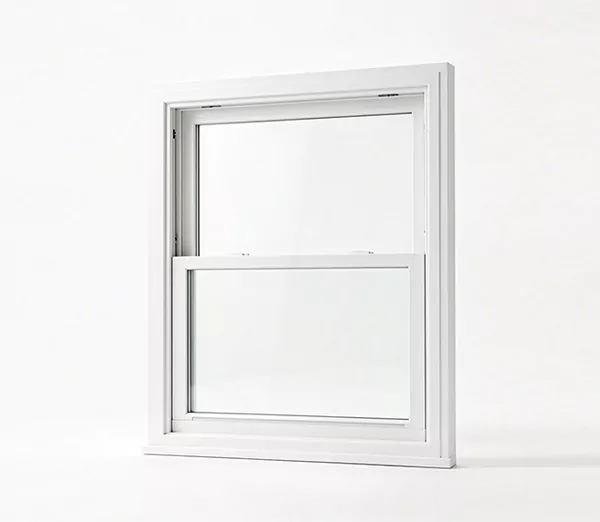
A double-hung window has two operable sashes. The lower sash can slide upward, while the upper sash can slide downward.
This provides more control over ventilation. You can open either sash independently or open both at the same time. With both openings available, cooler air can enter through the lower portion while warmer air can escape through the upper portion.
Double-hung windows are particularly useful in:
- Bathrooms
- Living rooms
- Second-story rooms
- Areas requiring more flexible ventilation
- Locations where interior cleaning is preferred

Single-Hung vs. Double-Hung: 6 Key Differences
1. Operation
The operating mechanism is the most obvious difference.
With a single-hung window, only the lower sash moves. The upper sash remains fixed.
With a double-hung window, both sashes can move independently, giving you more options for controlling airflow.
If you only need a basic vertical-opening window, the additional operation of a double-hung window may not be necessary.
2. Ventilation
Double-hung windows have the advantage when ventilation flexibility is important.
A single-hung window provides airflow through the lower sash. A double-hung window allows you to open the top sash, bottom sash, or both.
Opening both can create a more flexible airflow path through the room, while opening only one sash lets you adjust ventilation according to the conditions.
For rooms such as bathrooms or other spaces where regular ventilation is important, this added control can be useful.
3. Cleaning and Maintenance
This is one of the most practical differences between the two designs.
Many double-hung window systems allow both sashes to tilt inward, making it possible to clean exterior glass from inside the building. This is especially useful for windows installed on upper floors.
A single-hung window may also have a tilt-in lower sash, depending on the specific system. However, because its upper sash is fixed, cleaning the exterior of that section may require access from outside.
For hard-to-reach windows, double-hung is generally the more convenient option.
4. Cost
Single-hung windows are generally less expensive than double-hung windows.
The primary reason is their simpler operating configuration. A single-hung window has fewer moving components, while a double-hung window requires operating hardware for two sashes.
However, window type is only one factor in the final price. The total cost can also vary according to:
- Frame material
- Window dimensions
- Glass specification
- Hardware
- Finish
- Customization
- Installation method
Therefore, the cost difference between single-hung and double-hung windows should be evaluated based on the complete window specification rather than operation alone.
5. Energy Efficiency
Single-hung windows can have a slight advantage in terms of air infiltration because the upper sash remains stationary, creating fewer operable areas where air leakage can potentially occur.
However, window type alone does not determine energy performance.
The actual performance of either window can also be strongly influenced by:
- Frame material
- Glazing
- Glass coatings
- Weather seals
- Hardware
- Manufacturing quality
- Installation
For this reason, it is too simplistic to say that every single-hung window is more energy efficient than every double-hung window. The complete window system should be evaluated against the project’s performance requirements.
6. Installation and Accessibility
Both single-hung and double-hung windows can be used in new construction and replacement projects. The more important question is how the window will be accessed and operated after installation.
For example, a single-hung window can be practical when installed:
- Above a kitchen counter
- In a first-floor room
- In a location where the upper sash is difficult to reach
- Where only basic ventilation is required
A double-hung window can make more sense when both sashes need to be accessible for ventilation or cleaning.
Which Is Better: Single-Hung or Double-Hung?
There is no universal winner. The right window depends on what the project actually needs.
Choose Single-Hung Windows If:
- Initial cost is a major consideration
- Basic ventilation is sufficient
- The upper sash does not need to operate
- The window is easy to access from outside
- You want a simpler operating configuration
Choose Double-Hung Windows If:
- Flexible ventilation is important
- You want to open either the top or bottom sash
- Exterior glass needs to be cleaned from inside
- The windows are installed on upper floors
- The room requires frequent ventilation
This is why both window types continue to be used across residential and commercial projects rather than one replacing the other.
Single-Hung vs. Double-Hung Windows for Different Applications
| Application | Recommended Option | Main Consideration |
|---|---|---|
| Bedroom | Single or Double-Hung | Depends on ventilation needs |
| Bathroom | Double-Hung | Flexible ventilation |
| Second Floor | Double-Hung | Easier interior cleaning |
| First Floor | Single or Double-Hung | Accessibility is less restrictive |
| Budget-Focused Project | Single-Hung | Simpler operating system |
| Hard-to-Reach Window | Double-Hung | Both sashes can often tilt inward |
| Kitchen | Single-Hung or Double-Hung | Consider counter height and operation |
These are general guidelines rather than fixed rules. Window dimensions, climate, building design, glazing, and local requirements should also be considered.
Are Single-Hung Windows More Energy Efficient?
They can be, but the difference should not be considered in isolation.
Because a single-hung window has only one operable sash, it can have fewer potential air leakage points than a comparable double-hung design. Several major manufacturers make the same distinction when comparing the two window types.
However, a well-designed double-hung window can also provide strong energy performance.
For a project where thermal performance is important, pay attention to the complete specification, including:
- Frame construction
- Glass type
- Number of glazing layers
- Low-E coating
- Spacer system
- Weatherstripping
- Air and water performance
- Installation quality
The number of operable sashes is only one part of the equation.
Can Single-Hung and Double-Hung Windows Be Customized?
Yes. Both configurations can be adapted to different project requirements depending on the manufacturer and window system.
Customization may include:
- Window dimensions
- Aluminum, uPVC, wood, or other frame materials
- Double or triple glazing
- Low-E glass
- Tempered or laminated glass
- Frame colors and finishes
- Hardware
- Grid or decorative patterns
- Opening configurations
- Performance specifications
For projects involving multiple window types, using a common frame system and finish across single-hung and double-hung configurations can also help maintain a consistent architectural appearance.
Single-Hung vs. Double-Hung: Which Should You Specify?
If your priority is simplicity and cost efficiency, a single-hung window is often the more practical choice.
If your priority is ventilation flexibility and easier maintenance, a double-hung window offers more functionality.
The decision ultimately comes down to the balance between cost, operation, ventilation, accessibility, cleaning, and overall window performance. Instead of choosing one style for an entire project, consider where each configuration provides the most practical benefit.
FAQs
What is the main difference between single-hung and double-hung windows?
A single-hung window has one operable lower sash and one fixed upper sash. A double-hung window has two operable sashes that can move independently.
Are single-hung windows cheaper than double-hung windows?
Generally, yes. Single-hung windows typically cost less because they have fewer moving components, although the final price also depends on materials, size, glazing, hardware, and customization.
Which provides better ventilation, single-hung or double-hung?
Double-hung windows provide more ventilation flexibility because either sash can be opened independently, or both can be opened at the same time.
Which is easier to clean?
Double-hung windows are generally easier to clean when both sashes can tilt inward. This allows the exterior surfaces to be reached from inside, which is particularly useful on upper floors.
Are single-hung windows more energy efficient?
They can have a slight advantage because the fixed upper sash provides fewer potential air leakage points. However, glazing, frame construction, seals, and installation also have a major influence on actual energy performance.
Which is better for a second-floor window?
Double-hung windows are often a practical choice for second-floor applications because both sashes can typically tilt inward for easier cleaning. However, the final selection should also consider ventilation, building design, and performance requirements.
Final Thoughts
Single-hung windows prioritize simplicity and cost efficiency, while double-hung windows provide greater ventilation control and easier maintenance. Neither is universally better. The right choice depends on the location, operating requirements, accessibility, budget, and performance specifications of your project.
For custom residential or commercial window projects, the best solution is often the one that matches the requirements of each opening rather than using the same configuration everywhere.
Not sure whether single-hung or double-hung windows are right for your project? Email us at wang@gddlsn.com for custom window solutions and project recommendations.