
Window grilles are decorative or simulated dividing bars that visually separate a window into smaller sections. Today, they are used primarily to add architectural character rather than to hold individual panes of glass together. The right grille type, pattern, profile, and placement can make a window look traditional, modern, farmhouse-inspired, or historically accurate.
This guide explains the main types of window grilles, popular grille patterns and profiles, their advantages and disadvantages, cleaning and energy considerations, retrofit options, and how to choose the right configuration for different window styles.
What Are Window Grilles?
Window grilles are bars or strips that visually divide a window into smaller sections, creating the appearance of multiple individual glass panes.
The terms window grilles and window grids are often used interchangeably in the residential window industry. Historically, similar components were functional because they helped hold multiple small panes of glass together. Modern windows can use one large insulated glass unit instead, while grilles recreate the divided-pane appearance as a design feature.
This distinction is important because a window can look like it contains six or more individual panes without actually using separate pieces of glass.
Modern grille systems can be positioned:
- Between the panes of insulating glass
- On the interior and exterior surfaces of the glass
- As removable interior components
- As part of a true divided-lite construction
The construction method affects appearance, cleaning, maintenance, and the level of authenticity.
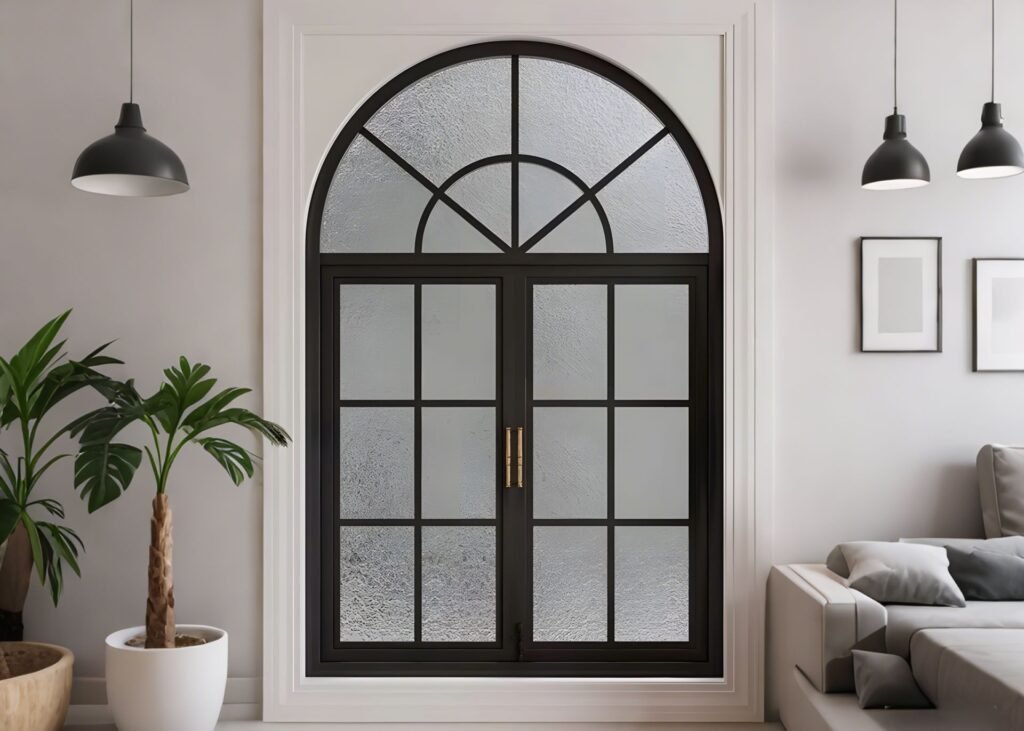
Window Grilles vs. Muntins vs. Mullions
These terms are sometimes used interchangeably in consumer content, but they describe different window components.
| Term | Typical meaning |
|---|---|
| Window grille | A decorative or simulated bar used to create a divided-pane appearance |
| Window grid | A common consumer term for a window grille pattern |
| Muntin | A member that separates individual glass lites |
| Mullion | A structural member that separates two or more window units |
| True divided lite | A window constructed from individual glass panes separated by muntins |
For modern insulated windows, “grille” or “grid” generally refers to the visual dividing element rather than a structural component.
What Are the Different Types of Window Grilles?
The main differences between grille systems come from where the grille is located and how closely it recreates the appearance of individual glass panes.
1. Grilles-Between-the-Glass
Grilles-between-the-glass, commonly called GBG, are permanently sealed between the panes of an insulating glass unit.
Because the grille is protected inside the glass assembly, the interior and exterior glass surfaces remain relatively smooth.
Main advantages:
- Easy to clean
- Low maintenance
- Protected from weather and physical contact
- Clean, consistent appearance
- Suitable for many traditional and contemporary designs
GBG is often a practical choice when the visual effect of divided glass is desired without adding bars to the exposed glass surfaces.
2. Simulated Divided Lite
Simulated divided lite, or SDL, uses grille bars attached to the interior and exterior sides of the glass to create the appearance of individual panes.
Unlike true divided lites, the window can still use a larger insulated glass unit.
SDL is useful when appearance is a higher priority and a more authentic divided-window effect is desired.
The bars create visible depth on the glass surface, making the window look more like a traditional multi-pane window than a simple between-the-glass grille.
3. Simulated Divided Lite With Spacer Bar
Some SDL systems add a spacer bar between the panes of glass.
This creates additional depth because the exterior and interior grille bars align with a spacer inside the insulating glass unit.
The result is a closer visual approximation of a traditional divided-lite window.
This configuration can be particularly useful for:
- Historic-style homes
- Colonial architecture
- Traditional residences
- Restoration projects
- Projects where grille depth and shadow lines matter
4. Authentic or True Divided Lite
Authentic divided lite, or ADL, uses separate pieces of glass divided by muntin bars.
This is the most traditional construction because the individual glass panes are physically separated.
The appearance is highly authentic, making it appropriate for historic restoration and architectural designs that require traditional window detailing.
However, authentic divided-lite construction is different from modern single-unit insulated glass systems, so the appropriate configuration depends on the window system, performance requirements, and project specifications.
5. Removable Interior Grilles
Removable interior grilles are installed on the room side of the window and can be removed when necessary.
Their main advantage is flexibility.
They can provide a traditional grille appearance while allowing the grille to be removed for easier cleaning or maintenance.
This option can also be useful when a homeowner wants the ability to change the appearance of the window without replacing the entire unit.
Window Grille Types at a Glance
| Grille Type | Appearance | Cleaning | Maintenance | Authenticity |
|---|---|---|---|---|
| Between-the-glass | Clean and subtle | Easy | Low | Moderate |
| Simulated divided lite | Traditional | Moderate | Moderate | High |
| SDL with spacer | Deep, traditional appearance | Moderate | Moderate | Very high |
| Authentic divided lite | True individual panes | More involved | Higher | Highest |
| Removable interior grille | Traditional | Easy after removal | Flexible | Moderate to high |
The best choice depends on whether the priority is appearance, maintenance, historical accuracy, or a combination of these factors.
Popular Window Grille Patterns
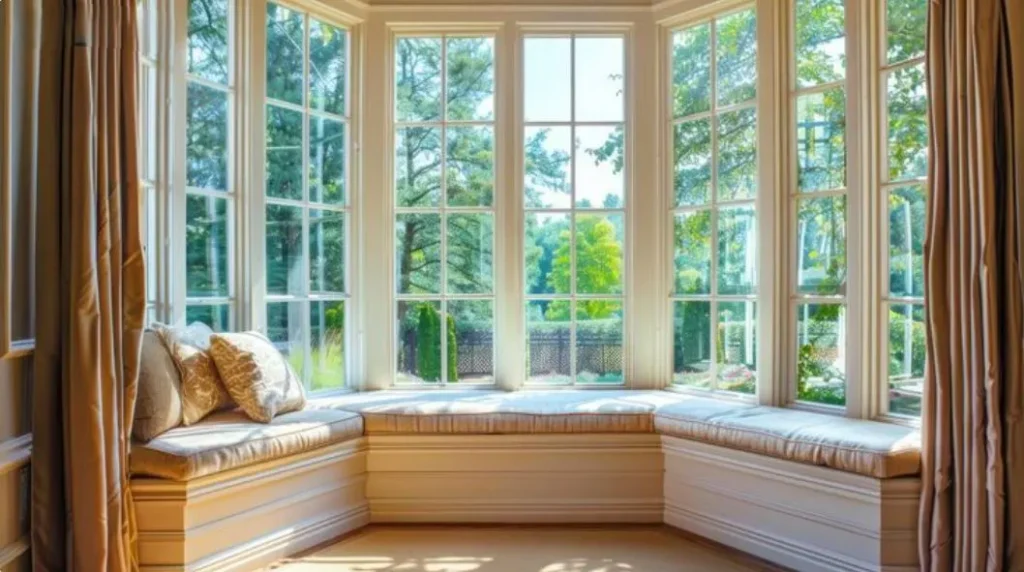
The grille pattern determines how the window is visually divided. Pattern selection should be considered together with the architectural style, window proportions, and surrounding doors.
Colonial and Traditional Window Grilles
Traditional or Colonial patterns generally divide the glass into a regular arrangement of smaller rectangular sections.
They work particularly well with:
- Colonial homes
- Traditional architecture
- Brick exteriors
- Symmetrical façades
- Double-hung windows
Because Colonial architecture emphasizes symmetry, evenly distributed grille patterns can reinforce the overall design.
Prairie Window Grilles
Prairie patterns typically leave a larger area of unobstructed glass in the center while placing smaller divisions around the perimeter.
This creates a balance between decorative detailing and open glass.
Prairie grilles are commonly associated with:
- Prairie-style homes
- Ranch homes
- Contemporary traditional designs
- Modern farmhouse architecture
The large central glass area also makes Prairie patterns useful when a divided appearance is desired without covering the entire window with grille lines.
Craftsman Window Grilles
Craftsman-style windows often use a grille pattern concentrated near the top portion of the window.
This creates architectural detail without dividing the entire glass area.
Top-row patterns work particularly well when the goal is to preserve a large unobstructed view while adding traditional character.
Farmhouse Window Grilles
Farmhouse windows often use simple, strong grille patterns rather than highly ornate configurations.
A basic cross or evenly divided pattern can complement:
- Modern farmhouse homes
- Black-framed windows
- White siding
- Rustic materials
- Simple exterior elevations
The key is restraint. A complicated grille pattern can conflict with the clean lines commonly associated with modern farmhouse design.
Cottage Window Grilles
Cottage-style patterns can use smaller panes and more decorative divisions to create a traditional, informal appearance.
They can work well with:
- Cottage homes
- Country-style architecture
- Traditional renovations
- Smaller windows
Custom Window Grilles
Custom grille patterns allow the horizontal and vertical divisions to be adjusted according to the window dimensions and architectural requirements.
Custom designs can include:
- Diamond patterns
- Radius patterns
- Decorative patterns
- Asymmetrical arrangements
- Historic reproductions
- Project-specific configurations
Custom grilles are particularly useful when standard patterns do not match the proportions or architectural detailing of a project.
Window Grille Profiles
The grille profile refers to the shape and visual form of the grille bar itself.
Two windows can use the same grille pattern but look completely different because they use different profiles.
Common profile styles include:
Ogee Profile
An ogee profile uses curved detailing and creates a more ornate appearance.
It works well with:
- Historic architecture
- Traditional homes
- Classic wood windows
- Restoration projects
Putty Profile
A putty-style profile is designed to resemble traditional glazing putty and historic window construction.
It provides more visual depth than a simple flat grille while remaining relatively restrained.
Square Profile
Square profiles have clean, straight edges and are commonly used for contemporary architectural designs.
They can complement:
- Modern homes
- Minimalist façades
- Contemporary windows
- Simple geometric grille patterns
Contoured Profile
Contoured grilles include additional surface shaping while maintaining a relatively traditional appearance.
They can provide more visual definition than a flat profile.
Flat Profile
Flat grilles provide a simple, minimal appearance.
They are suitable for modern designs where the grille pattern should remain subtle rather than becoming a major visual feature.
Grille Profile vs. Grille Pattern
These two terms should not be confused.
Pattern describes the arrangement of the grille bars.
Profile describes the shape of the grille bar itself.
For example, a window might use:
Prairie pattern + flat profile
or:
Colonial pattern + putty profile
This distinction gives manufacturers and designers more flexibility when specifying a window.
Window Grille Bar Widths
Grille width also affects the appearance of a window.
Common grille widths vary by manufacturer and product system. Examples found in current window product offerings include narrow profiles around 5/8 inch and wider profiles extending beyond 1 inch.
Narrower grilles generally create a lighter, more contemporary appearance, while wider profiles create stronger visual definition.
When selecting grille width, consider:
- Overall window size
- Sash dimensions
- Glass area
- Frame profile
- Architectural style
- Distance from the window
- Other exterior details
A grille that looks appropriate on a small double-hung window may appear too heavy on a large picture window.
Window Grilles for Different Window Types
The same grille pattern does not necessarily look the same on every type of window.
Casement Windows
Casement windows typically use a grille pattern across one continuous sash.
Simple rectangular or Prairie patterns can maintain a clean appearance while preserving the large glass area that makes casement windows attractive.
Double-Hung Windows
Double-hung windows commonly use traditional configurations such as:
- 6-over-6
- 6-over-1
- 4-over-4
- Custom lite arrangements
The term 6-over-6, for example, indicates six visually divided sections in the upper sash and six in the lower sash.
Sliding Windows
Sliding windows can use horizontal and vertical grille patterns, although the proportions of the sash should be considered carefully.
Because sliding windows often emphasize horizontal proportions, overly dense vertical grille arrangements can make the window look visually busy.
Picture Windows
Large picture windows require special attention to grille density.
A heavy grille pattern can significantly change the visual openness of a large glass area. Minimal Prairie, perimeter, or custom patterns can preserve more of the open view.
Bay and Bow Windows
Bay and bow windows often combine multiple window units.
Using a consistent grille pattern across each unit can create a more cohesive appearance.

Do Window Grilles Affect Energy Efficiency?
Window grilles themselves are primarily a design feature, so they should not be treated as the main factor determining a window’s energy performance.
Overall thermal performance depends much more heavily on:
- Glass configuration
- Low-E coatings
- Gas fills
- Frame material
- Thermal breaks
- Spacer systems
- Air leakage
- Installation quality
The construction of the grille can still matter to the overall window system.
For example, between-the-glass grilles remain inside the insulating glass unit, while SDL systems place grille bars on the glass surfaces.
The correct approach is to evaluate the complete window assembly, rather than assuming that a particular grille pattern automatically makes a window more or less energy efficient.
Do Window Grilles Reduce Natural Light?
Window grilles can change the visual perception of the glass area, but they do not block natural light in the same way as a solid wall or opaque window covering.
The impact depends on:
- Grille width
- Number of grille divisions
- Pattern density
- Window size
- Glass area
- Grille material
A large window with a simple Prairie pattern will generally maintain more visually open glass than the same window with many narrow rectangular divisions.
If maximizing unobstructed glass is a priority, consider:
- Narrow grille profiles
- Fewer divisions
- Prairie patterns
- Top-row patterns
- Minimal custom designs
- No grilles
Are Window Grilles Easy to Clean?
Cleaning depends heavily on grille construction.
| Grille Configuration | Cleaning Consideration |
|---|---|
| Between-the-glass | Smooth exterior glass is easy to clean |
| Removable interior | Grille can be removed for access |
| SDL | Surface grille bars require more attention |
| SDL with spacer | More detailing and components to clean |
| Authentic divided lite | Individual panes and muntins require more detailed cleaning |
If low maintenance is a priority, between-the-glass grilles are generally one of the most convenient options.
If historical appearance is more important, SDL or authentic divided-lite construction may be worth the additional maintenance.
Can You Add Grilles to Existing Windows?
Sometimes, but it depends on the existing window construction.
Possible retrofit solutions include:
- Removable grille inserts
- Interior grille kits
- Adhesive or clip-on grille systems
- Manufacturer-specific replacement grilles
Compatibility can depend on:
- Window frame material
- Glass construction
- Sash design
- Glass dimensions
- Existing glazing system
- Grille attachment method
Some manufacturers only offer grille selection when a new window is ordered, while aftermarket suppliers provide grille products intended for existing windows.
Before purchasing a retrofit grille, measure the existing window carefully and confirm that the grille system is compatible with the glass and frame.
Pros and Cons of Window Grilles
Advantages
1. Add architectural character
Grilles can make a simple window look more traditional and detailed.
2. Match architectural styles
Colonial, Prairie, Craftsman, farmhouse, and historic homes can all benefit from appropriately selected grille patterns.
3. Provide extensive customization
Pattern, profile, width, color, and grille placement can often be customized.
4. Create a divided-lite appearance
SDL and other systems can reproduce the appearance of traditional multi-pane windows while using modern glazing systems.
5. Offer flexible maintenance options
Between-the-glass and removable grille systems can reduce cleaning difficulty.
Disadvantages
1. More visual obstruction
Dense patterns can make a large glass area look busier.
2. Some configurations require more cleaning
Surface-mounted grilles can create additional areas that collect dust and require cleaning.
3. Wrong patterns can weaken the design
A grille pattern that does not match the architecture can make a window look visually inconsistent.
4. Custom configurations can cost more
Special patterns, profiles, materials, and retrofit solutions may increase the overall window cost.
5. They are not necessary for every architectural style
Ultra-modern homes often benefit from large areas of unobstructed glass rather than traditional grille patterns.
How Much Do Window Grilles Cost?
There is no single standard price for adding window grilles because the cost depends on the grille construction, window size, material, pattern, profile, and whether the grilles are selected for a new window or installed as a retrofit.
As a general comparison:
| Cost Factor | Typical Impact on Price |
|---|---|
| Standard grille pattern | Usually lower |
| Custom grille pattern | Higher |
| Between-the-glass grille | Often economical within a new window system |
| Removable grille | Moderate |
| Simulated divided lite | Moderate to higher |
| SDL with spacer | Higher |
| Authentic divided lite | Higher |
| Custom profile or historic reproduction | Higher |
| Retrofit installation | Highly variable |
For new construction or replacement windows, grille cost is often incorporated into the window configuration rather than treated as a completely separate installation.
The most accurate price should therefore be based on the complete window specification, including size, frame material, glazing, grille type, pattern, and quantity.

How to Choose the Right Window Grilles
The best grille configuration depends on the priorities of the project.
| Priority | Recommended Direction |
|---|---|
| Easy cleaning | Between-the-glass |
| Traditional appearance | SDL |
| Historic appearance | Authentic divided lite or SDL with spacer |
| Lower maintenance | Between-the-glass |
| Easy removal | Removable interior grille |
| Large unobstructed view | Minimal or Prairie pattern |
| Colonial architecture | Traditional / Colonial pattern |
| Craftsman architecture | Top-row pattern |
| Farmhouse architecture | Simple cross or Prairie pattern |
| Modern architecture | Narrow flat or square profile |
| Historic restoration | Custom or historically accurate pattern |
| Unique architecture | Custom grille pattern |
The window’s proportions should also influence the decision. A grille pattern should complement the size and shape of the window rather than simply being copied from another project.
Window Grilles or No Grilles?
There is no universal answer.
Choose grilles when the goal is to:
- Add architectural character
- Match a traditional home
- Recreate a historic appearance
- Coordinate windows with traditional doors
- Introduce visual detail
Consider no grilles when the goal is to:
- Maximize unobstructed views
- Emphasize large glass areas
- Create a minimalist appearance
- Complement contemporary architecture
- Keep the window visually simple
The most important consideration is consistency. Grilles look most intentional when their pattern, profile, and proportions work with the rest of the building.
What Window Grille Pattern Is Best for Your Home?
The “best” pattern depends more on architectural style and window proportions than on a universal design rule.
For a Colonial home, symmetrical traditional patterns are usually a natural fit.
For a Craftsman home, a top-row pattern can add detail without dividing the entire glass area.
For a Farmhouse home, simple cross or Prairie patterns can provide character without excessive ornamentation.
For a modern home, narrow flat or square profiles with minimal divisions can preserve clean architectural lines.
For a historic restoration, the existing window pattern should be studied carefully before selecting a replacement grille. Matching the original proportions can be more important than choosing a currently popular pattern.
Final Thoughts
Window grilles are more than decorative lines on glass. The grille type, pattern, profile, width, and placement all influence the appearance and practicality of a window.
Between-the-glass grilles prioritize easy maintenance, SDL systems create a more traditional appearance, and authentic divided lites provide the closest connection to historic window construction. Pattern selection should then follow the architecture, window proportions, and desired level of visual detail.
For new construction, replacement windows, or custom projects, the grille should be specified together with the window frame, glazing, dimensions, and overall architectural requirements rather than treated as an isolated decorative feature.
Need help choosing the right window grille for your project? Email wang@gddlsn.com discuss custom grille patterns, profiles, materials, and window configurations.