
Choosing professional aluminum casement windows requires more than comparing frame thickness, glass options, or prices. A high-quality window depends on how its aluminum profiles, glazing, hardware, sealing system, and fabrication work together to meet the building’s structural, thermal, and weather-resistance requirements.
Whether you are selecting windows for a residential property, a commercial building, or a custom construction project, the following factors will help you evaluate product quality and choose a suitable manufacturer.
1. Evaluate the Aluminum Frame and Profile Design
The aluminum frame provides the structural foundation of a casement window. Its profile design, dimensions, alloy properties, and fabrication quality affect the window’s strength, durability, and ability to accommodate the selected glazing.
Check the Profile Structure and Wall Thickness
Aluminum profiles should be designed to support the window’s dimensions, glass weight, opening configuration, and expected wind loads. Larger windows and heavier sashes may require different profile configurations from smaller residential units.
Wall thickness is one factor to consider, but thicker profiles do not automatically produce better windows. The overall cross-sectional design, alloy properties, reinforcement where applicable, corner connections, and hardware attachment points also influence structural performance.
When comparing products, ask the manufacturer for profile drawings and technical specifications. For larger openings or exposed locations, confirm that the proposed window system has been evaluated for the required structural loads.
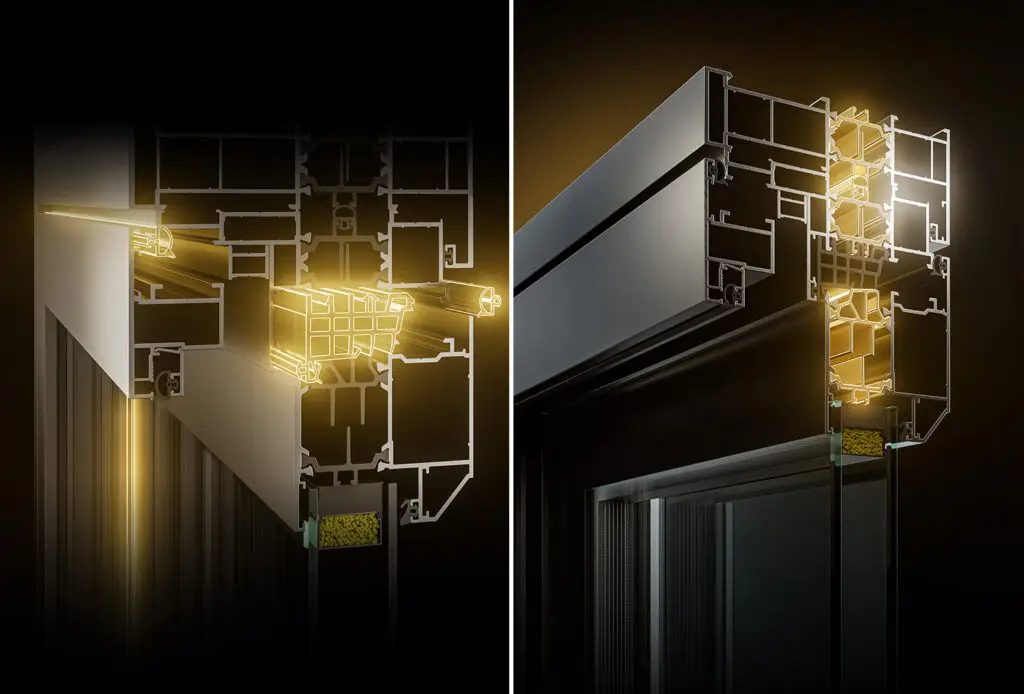
Consider Thermal Break Technology
Aluminum conducts heat relatively efficiently. Thermal break aluminum windows use an insulating material between the interior and exterior portions of the frame to reduce heat transfer through the profile.
This design can improve frame thermal performance, particularly when combined with suitable glazing and effective weather seals. However, the overall result depends on the complete window assembly, not the thermal break alone.
Thermal break systems are worth considering for buildings with demanding energy-efficiency requirements or significant differences between indoor and outdoor temperatures. In mild climates or projects with different priorities, the most suitable configuration will depend on the building’s design and performance targets.
Inspect Surface Finishes and Corrosion Protection
The finish affects both appearance and resistance to environmental exposure. Common options include powder coating, anodizing, and other manufacturer-specific finishing systems.
When choosing a finish, consider:
- Climate and exposure: Coastal environments may require additional attention to corrosion resistance.
- Color consistency: Confirm the specified color and finish across the window components.
- Durability: Ask about the finish specification and any relevant durability or corrosion-resistance testing.
- Maintenance: Understand the recommended cleaning methods and care requirements.
A professional supplier should be able to identify the proposed finish and provide relevant technical documentation rather than relying solely on color samples.
2. Choose the Right Glass Configuration
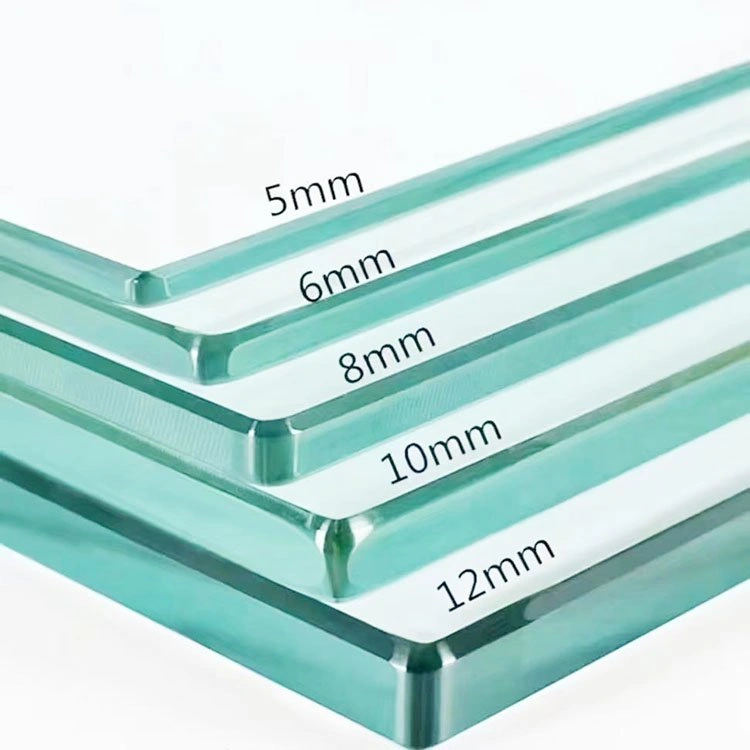
Glass affects thermal performance, solar heat gain, sound insulation, safety, and visual appearance. The appropriate glazing depends on the building’s climate, orientation, room function, and applicable safety requirements.
Compare Single and Double Glazing
Single glazing uses one pane of glass, while double glazing consists of two panes separated by a sealed cavity. The cavity may contain air or an insulating gas, depending on the product specification.
Double glazing generally offers better thermal insulation than comparable single glazing. It can also improve sound insulation, although the result depends on glass thickness, pane combinations, cavity design, frame construction, and installation quality.
For projects in hot climates, consider how glazing affects solar heat gain as well as heat transfer. The best configuration is not necessarily the one with the most panes, but the one that meets the project’s performance requirements.
Understand Low-E Glass
Low-emissivity, or Low-E, glass has a coating designed to reduce radiative heat transfer. Depending on the coating and glazing configuration, it can help improve insulation and control solar heat gain.
For buildings exposed to strong sunlight, the glass specification should account for window orientation, shading, visible light transmission, and the desired solar heat gain coefficient.
Ask for the relevant thermal and solar performance data for the proposed glazing unit rather than assuming that all Low-E glass performs identically.
Select Glass for Safety and Acoustic Requirements
Tempered glass is heat-treated to improve its resistance to mechanical and thermal stress. Laminated glass uses an interlayer between glass panes and can help retain fragments when the glass breaks.
These glass types serve different purposes, and neither should be selected solely as a general quality upgrade. The appropriate choice depends on the location of the window, impact risks, local safety requirements, and the intended level of protection.
For noise-sensitive environments, laminated acoustic glazing or an appropriately designed insulating glass unit may be worth considering. Performance depends on the complete glass assembly and window system.
3. Check the Hardware and Locking System
Casement windows rely on hinges or friction stays, handles, locking mechanisms, and other hardware to operate and secure the sash. These components must be compatible with the window’s size, weight, and opening direction.
Assess Hinges and Friction Stays
The hardware should be rated for the sash dimensions and weight. An oversized glass sash places greater demands on its hinges and attachment points, making correct hardware selection particularly important.
Check whether the hardware allows the sash to open and close smoothly without excessive resistance, sagging, or uneven movement. Also confirm that the fixing method is appropriate for the aluminum profile.
Inspect Handles and Locking Points
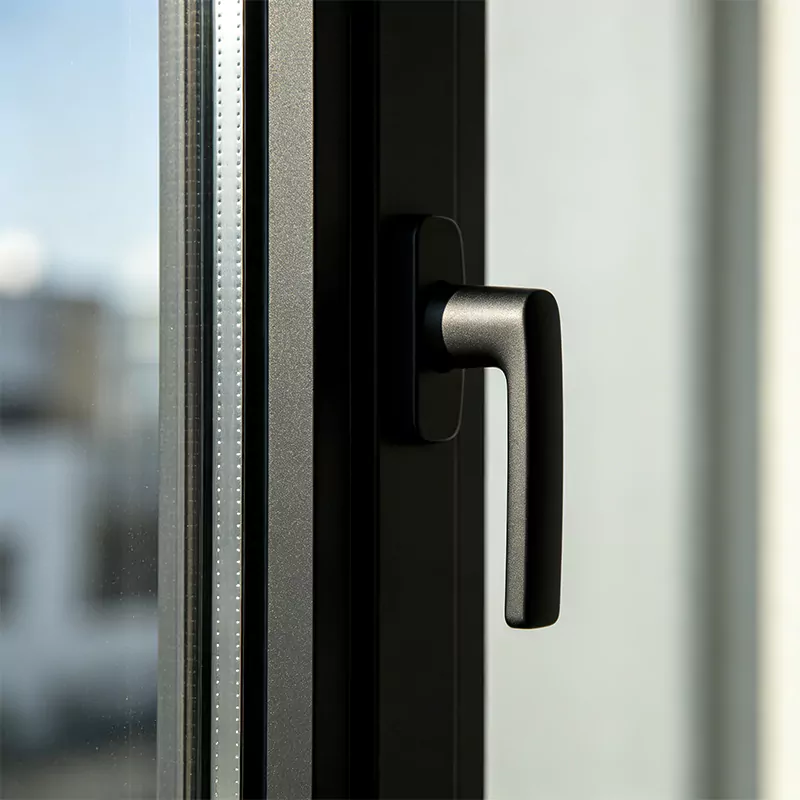
The handle should operate smoothly, and the locking points should engage properly when the window closes. Depending on the design, a casement window may use a single locking point or a multipoint locking arrangement.
More locking points do not automatically guarantee better security. The performance of the complete assembly also depends on the frame, sash, glass, hardware attachment, and installation.
For projects with specific security requirements, request information about the tested configuration and the applicable security standard.
Consider Maintenance and Replacement Parts
Hardware quality also affects long-term usability. Ask whether replacement parts are available, whether the hardware can be adjusted after installation, and what maintenance is required.
For large projects, consistent hardware specifications and access to replacement components can help simplify future maintenance across multiple windows.
4. Inspect the Sealing and Drainage Design
A well-designed casement window needs effective seals and a drainage system that manages water entering the frame’s intended drainage paths.
Check the Weatherstripping
Weatherstripping creates a seal between the sash and frame when the window closes. Its material, placement, continuity, and compression all affect air leakage and water resistance.
Inspect whether the seals form a continuous contact path around the intended sealing areas. The sash should close evenly without obvious gaps or excessive pressure on one side.
The presence of multiple seals does not, by itself, prove that a window is airtight or watertight. Actual performance depends on the entire design and the quality of fabrication and installation.
Examine Frame-to-Sash Fit and Corner Connections
Poorly aligned components can compromise sealing and make a window difficult to operate. Look for consistent gaps, properly joined frame corners, and secure hardware attachment points.
For custom windows, fabrication tolerances become especially important because the frame and sash must match the specified dimensions and opening configuration.
A supplier’s quality-control procedures should cover dimensional checks, assembly accuracy, and operating tests before the products leave the factory.
Understand Drainage Paths
Casement windows may include drainage channels and weep openings designed to direct water away from the frame. These features should be consistent with the system’s intended water-management design.
Drainage openings should not be blocked by sealant, finishes, or installation materials. At the same time, drainage features should not be confused with defects in the weather seals.
If water penetration is a concern, request test information for the complete window system and confirm that the proposed installation follows the manufacturer’s instructions.
5. Verify Performance Ratings and Test Reports
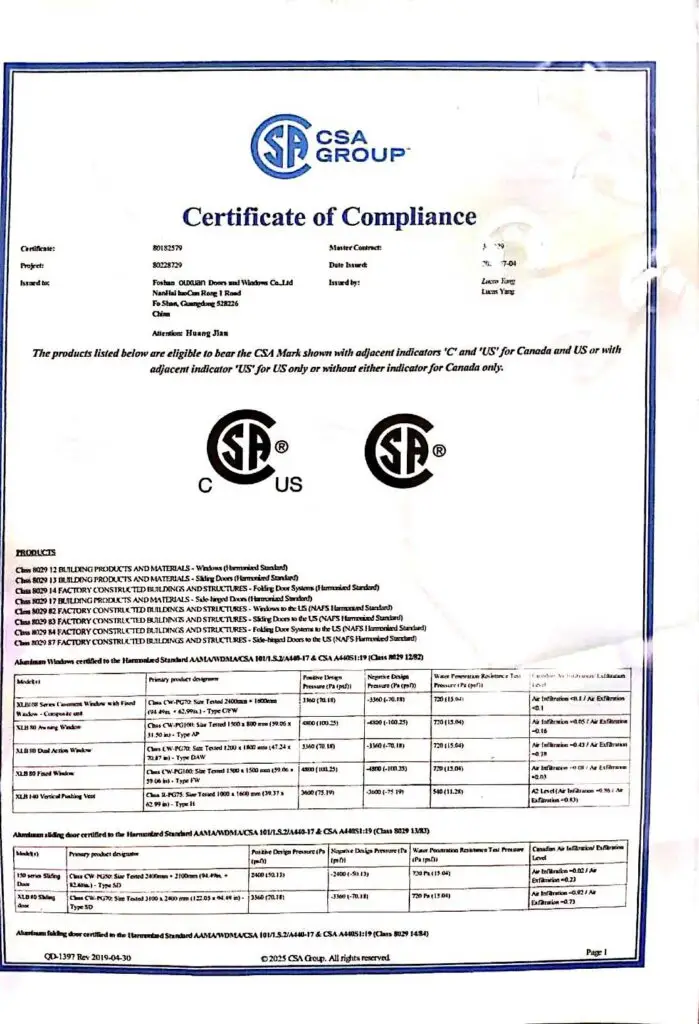
Appearance and component specifications cannot fully establish a window’s performance. For projects with defined technical requirements, ask for relevant test reports, product certifications, and performance data.
Air Leakage
Air-leakage testing measures the amount of air passing through a closed window under specified pressure conditions. Lower air leakage can help improve comfort and reduce unwanted air movement.
Compare results only when the test methods, units, and reporting conditions are compatible. A performance claim without a stated test basis is difficult to evaluate reliably.
Water Penetration Resistance
Water-penetration testing evaluates how a window performs under specified pressure and water exposure conditions. This is particularly relevant for buildings exposed to heavy rain or wind-driven rain.
Check the tested pressure and the conditions under which the result was obtained. A product’s performance should be suitable for the intended location and exposure rather than judged against an arbitrary universal number.
Structural and Wind-Load Performance
Casement windows must withstand the structural loads expected at their installation location. Wind exposure, building height, opening dimensions, and surrounding conditions can affect the required performance.
For large windows, upper-floor installations, or exposed buildings, confirm that the proposed system is appropriate for the project’s design pressures and applicable building requirements.
Thermal Performance
Thermal performance may be expressed through metrics such as U-factor or U-value, depending on the market and reporting convention. These values describe heat transfer, but they should be compared using consistent units and test or calculation methods.
For a complete window, performance depends on the frame, glass, spacer, seals, and overall geometry. Glass-only data should not be treated as the performance rating of the entire window.
Confirm That the Reports Match the Actual Product
A test report is useful only when it applies to the product being specified. Check the window system, dimensions, glazing configuration, opening type, and relevant hardware against the report.
If the supplier proposes a substantially different size or configuration from the tested specimen, ask whether the performance claims remain applicable.
Standards and certification requirements vary by market. Projects in North America, Europe, Singapore, and other regions may require different documentation, so confirm the applicable requirements before placing an order.
6. Select the Right Opening Style and Configuration
Even a technically sound window may be unsuitable if its opening arrangement conflicts with the room layout or building conditions.
Choose Between Inward- and Outward-Opening Casements
Inward-opening windows may be easier to access from inside for cleaning, but they need sufficient clearance within the room. Outward-opening windows can preserve interior space, although exterior clearance, wind exposure, and access for cleaning must be considered.
The choice should account for furniture placement, curtains, nearby walkways, balconies, and any restrictions on how far the sash can project.
Decide Between Single and Double Casement Windows
A single casement window has one operable sash, while a double casement configuration typically has two operable sashes.
Single-sash designs may suit narrower openings. Double casements can provide a wider opening and greater flexibility for ventilation, but their suitability depends on the frame dimensions, sash weight, and hardware capacity.
For wider openings, ask the manufacturer to confirm that the proposed configuration can meet the required structural and operational performance.
Consider Ventilation, Cleaning, and Room Use
Casement windows can provide a relatively wide clear opening compared with some other window styles. However, actual ventilation depends on the opening area, sash geometry, wind conditions, and the room’s overall ventilation design.
For kitchens, bathrooms, bedrooms, and other spaces, consider ventilation needs alongside privacy, safety, insect screens, and cleaning access.
The ideal configuration is the one that fits the building’s use and constraints, not necessarily the window with the largest opening.
7. Evaluate the Manufacturer’s Production and Quality Control
A reliable manufacturer should be able to translate the project specification into a consistent, accurately fabricated window system.
Review Manufacturing Precision
Ask how the manufacturer controls profile cutting, corner assembly, drilling, hardware installation, and final dimensions. These processes influence the fit between the frame and sash and the window’s ease of operation.
For custom orders, confirm how approved drawings, dimensional tolerances, and configuration changes are managed before production begins.
Ask About Quality Inspection
Quality checks should cover more than visual appearance. Depending on the product and production process, they may include dimensional inspection, finish checks, hardware operation, seal placement, and verification against the approved specification.
For large projects, ask how inspection records are maintained and how nonconforming products are handled.
Confirm Customization and Technical Support
A manufacturer serving custom projects should be able to clarify available profiles, glass combinations, opening configurations, hardware options, finishes, and relevant performance limitations.
Before production, confirm the approved drawings, hardware schedule, glazing specification, finish requirements, and installation details. Clear documentation reduces the risk of misunderstandings between the manufacturer, architect, contractor, and installer.
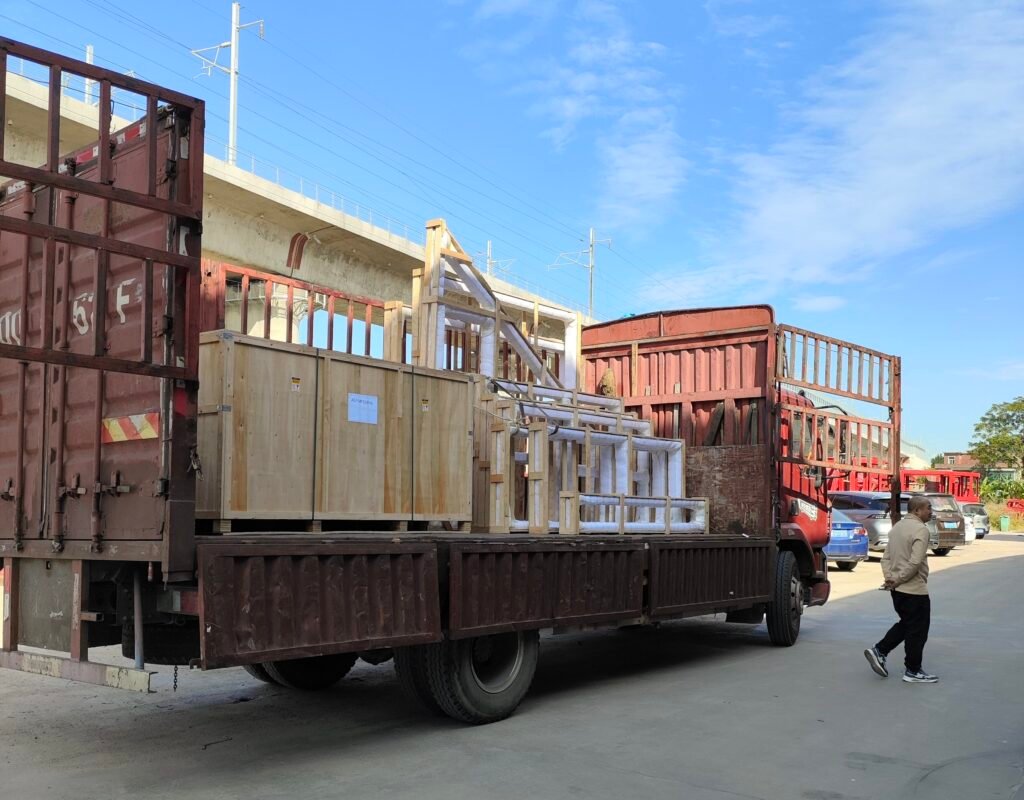
Check Packaging, Delivery, and After-Sales Support
Window quality can be compromised if products are poorly protected during transport or stored incorrectly before installation.
Ask how the windows are packaged, labeled, and protected against damage. Also confirm the expected delivery arrangements, warranty terms, maintenance guidance, and availability of replacement components.
For multi-unit developments, these details can be as important to project delivery as the initial product selection.
8. Compare Quotes and Total Project Costs
The lowest quotation does not necessarily represent the best value. Two aluminum casement windows may look similar while differing in profile design, glazing, hardware, surface treatment, testing, and installation scope.
When comparing quotations, check that they cover equivalent specifications.
Important cost factors include:
- Window dimensions and configuration: Larger sashes and more complex designs may require different profiles and hardware.
- Aluminum profile system: Standard and thermal break systems have different constructions and performance characteristics.
- Glass specification: Glass type, thickness, coatings, and insulating glass configurations affect cost.
- Hardware and locking systems: The hardware must be suitable for the sash dimensions, weight, and intended use.
- Surface finish: Color, coating system, and special finish requirements can affect pricing.
- Customization: Nonstandard dimensions, unusual shapes, and project-specific details may increase fabrication costs.
- Delivery and installation: Packaging, transport, site access, installation labor, and finishing work should be compared separately where possible.
Ask suppliers to quote against the same approved specification. This makes it easier to identify meaningful differences in product quality and scope rather than comparing headline prices alone.
FAQs
What makes an aluminum casement window high quality?
A high-quality aluminum casement window combines a suitably designed frame, compatible glazing, reliable operating hardware, effective seals, accurate fabrication, and verified performance. Its suitability should be assessed against the building’s requirements rather than a single specification such as profile thickness.
Are thermal break aluminum casement windows worth choosing?
They can be a good choice when reducing heat transfer through the frame is important. Their value depends on climate, building design, glazing, energy targets, and budget. Compare the thermal performance of the complete window rather than considering the thermal break in isolation.
Which glass is best for aluminum casement windows?
There is no single best option for every project. Double glazing and Low-E glass may help improve thermal performance, while tempered or laminated glass may be appropriate for specific safety requirements. The right combination depends on the climate, orientation, acoustic needs, safety rules, and intended use of the room.
How can I check the quality of casement window hardware?
Check whether the hinges and stays are suitable for the sash dimensions and weight, whether the handle and locking points operate smoothly, and whether the hardware is securely attached. For demanding projects, request relevant hardware specifications and evidence that the complete window meets its required performance criteria.
What certifications should I look for?
The appropriate certifications and test reports depend on the target market and project requirements. Look for documentation covering relevant air leakage, water penetration, structural performance, thermal performance, or other required properties. Confirm that the documents apply to the actual window system and configuration being purchased.
How do I choose a reliable aluminum casement window manufacturer?
Review the manufacturer’s technical documentation, customization capabilities, production quality controls, relevant test reports, and ability to meet the project’s delivery and support requirements. Clear specifications, consistent communication, and traceable quality checks are more useful indicators than promotional claims alone.
Conclusion
Choosing professional aluminum casement windows means evaluating the complete system, from the frame and glazing to the hardware, seals, testing, and manufacturing quality. Define the project’s requirements first, verify the relevant technical evidence, and compare suppliers using consistent specifications. This approach helps you select windows that fit the building’s needs and perform as intended.
Looking for professional aluminum casement windows for your project? Contact us at wang@gddlsn.com to discuss your requirements.