
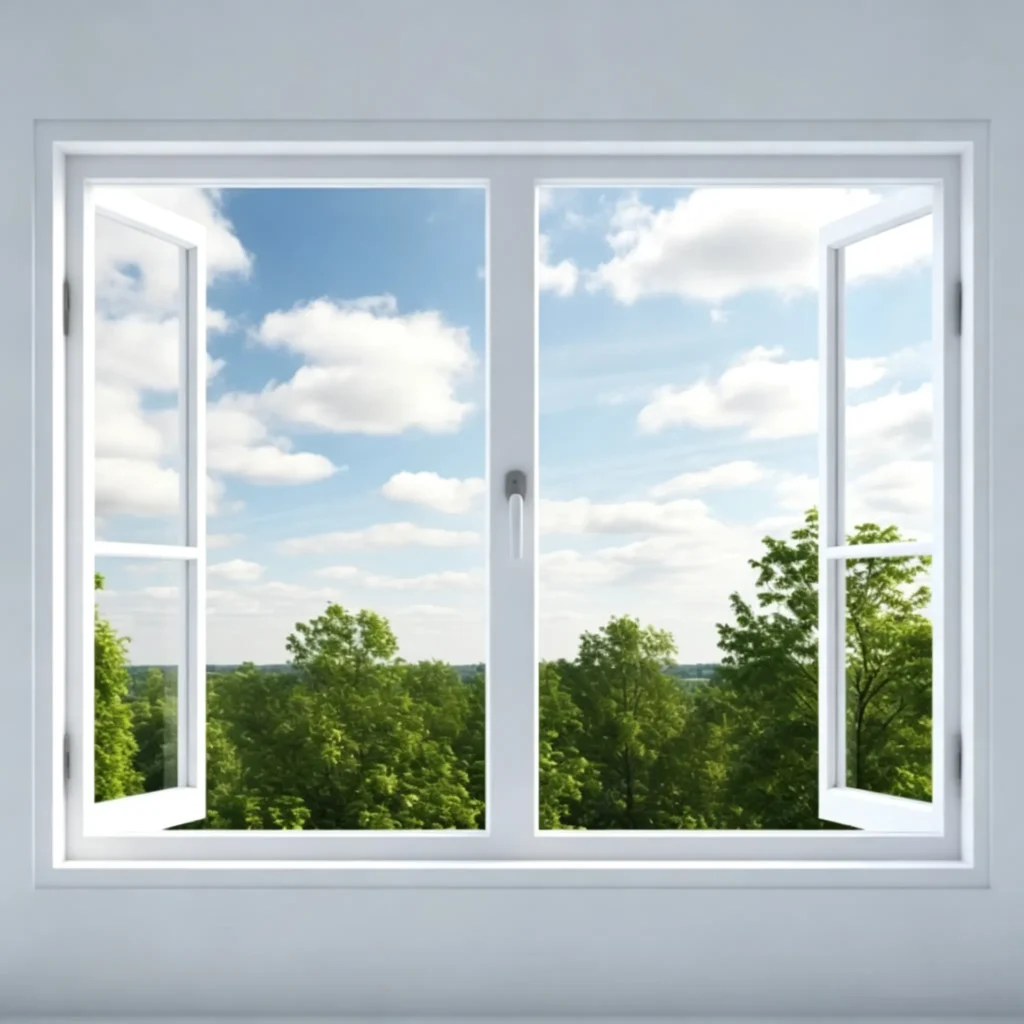
Hinged windows are windows that open by rotating around hinges attached to the frame, allowing the sash to swing inward or outward. Unlike sliding windows that move horizontally along tracks, hinged windows provide a wider opening area, better ventilation, and stronger sealing performance.
The most common types of hinged windows include casement windows, awning windows, and tilt-and-turn windows. They are widely used in residential homes, apartments, and architectural projects because they combine functional performance with flexible design options.
Choosing the right hinged window requires considering factors such as opening style, frame material, glass performance, ventilation requirements, and long-term durability.
What Are Hinged Windows?
A hinged window is a window system where the movable sash is connected to the frame through hinges.
When opened, the sash rotates around the hinge axis instead of sliding along a track.
The main components of a hinged window include:
- Window frame
- Movable sash
- Hinges
- Glass unit
- Locking hardware
- Weather seals
The hinge mechanism allows the window to open widely, creating a larger ventilation opening compared with many sliding window designs.
Because the sash closes tightly against the frame, hinged windows can also provide excellent air sealing when properly designed and installed.
How Do Hinged Windows Work?
The basic operating principle of hinged windows is simple:
- The sash is connected to the frame with hinges.
- The handle activates the locking mechanism.
- The sash swings open inward or outward.
- When closed, the sash presses against the weather seals to create a tight seal.
This design provides several performance advantages:
- Larger ventilation openings
- Better protection against air leakage
- Easier cleaning for certain designs
- Flexible architectural applications
The actual performance of a hinged window depends on the quality of the frame design, hardware system, sealing structure, and installation.
Types of Hinged Windows
Although many people associate hinged windows with casement windows, hinged windows include several different opening styles.
1. Casement Windows
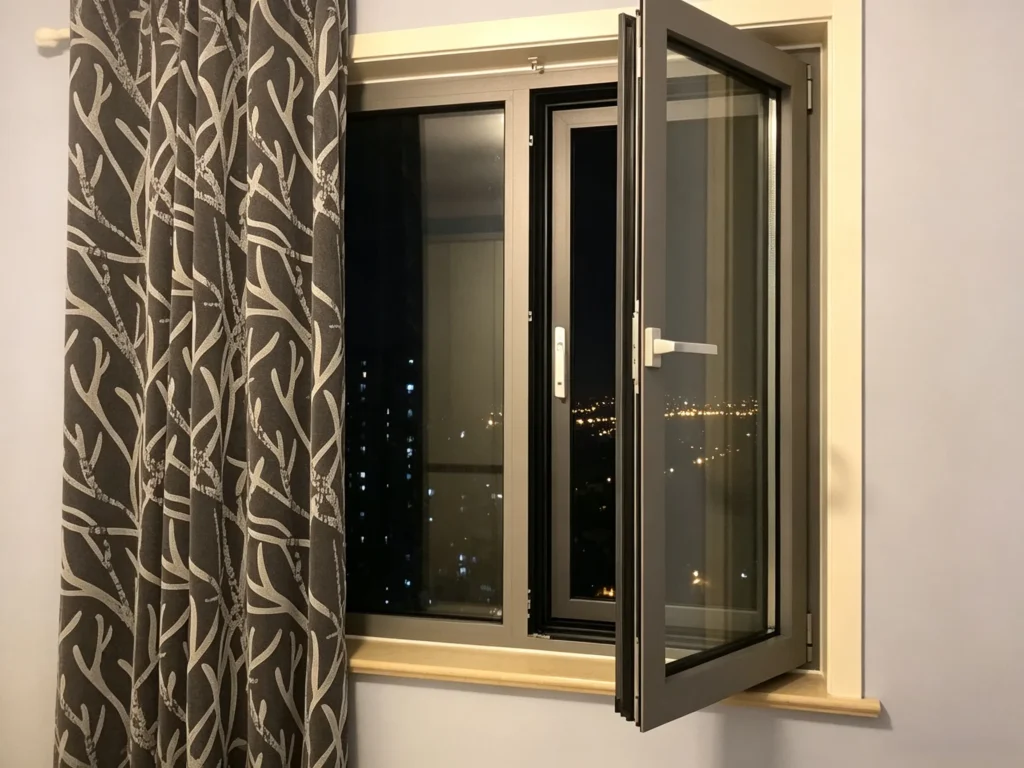
Casement windows are the most common type of hinged windows.
They use side-mounted hinges that allow the sash to open outward or inward like a door.
Features
- Side-hinged operation
- Large opening area
- Excellent ventilation
- Suitable for various residential applications
Advantages
Casement windows are popular because they provide:
Maximum airflow
The entire sash can open, allowing more fresh air to enter compared with many sliding window designs.
Strong sealing performance
When closed, the sash presses against the frame seals, helping reduce air leakage.
Clear views
Casement windows typically use larger uninterrupted glass areas, creating cleaner views.
They are commonly used in:
- Bedrooms
- Living rooms
- Modern homes
- High-end residential projects
2. Awning Windows
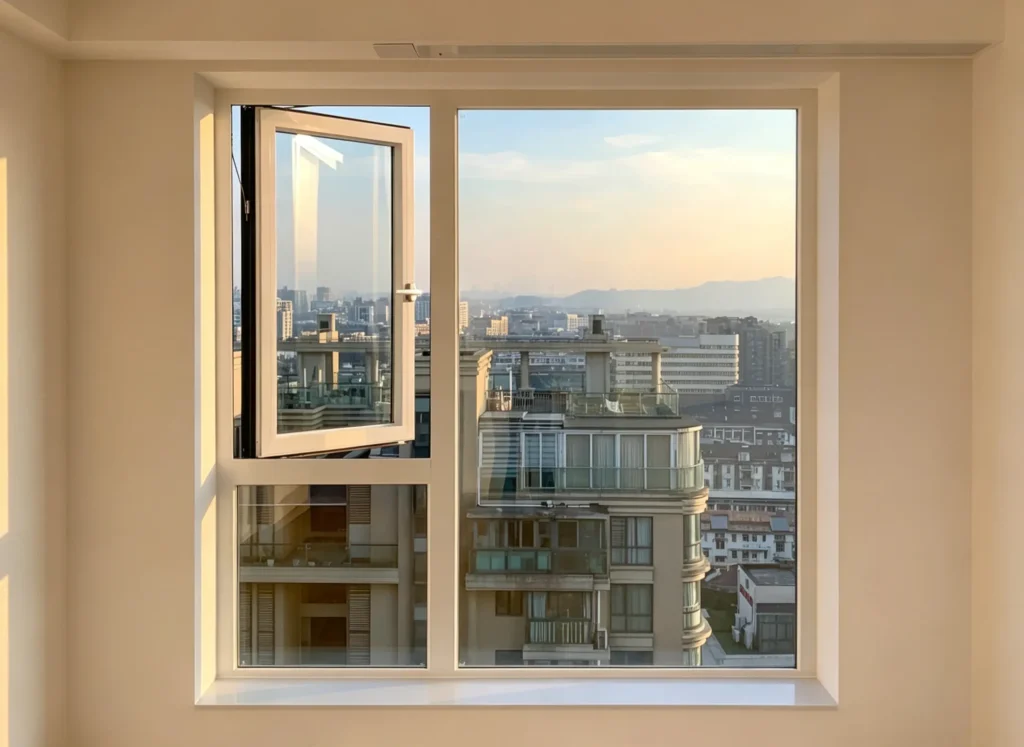
Awning windows are hinged at the top and open outward from the bottom.
They are designed to provide ventilation while offering some protection from rain.
Features
- Top-hinged structure
- Outward opening
- Suitable for wet climates
Advantages
Ventilation during light rain
Because the top remains connected to the frame, awning windows can often stay open during mild weather conditions.
Privacy and placement flexibility
They work well in areas where a higher window position is preferred.
Common applications include:
- Bathrooms
- Kitchens
- Basements
- Small openings
3. Tilt-and-Turn Windows
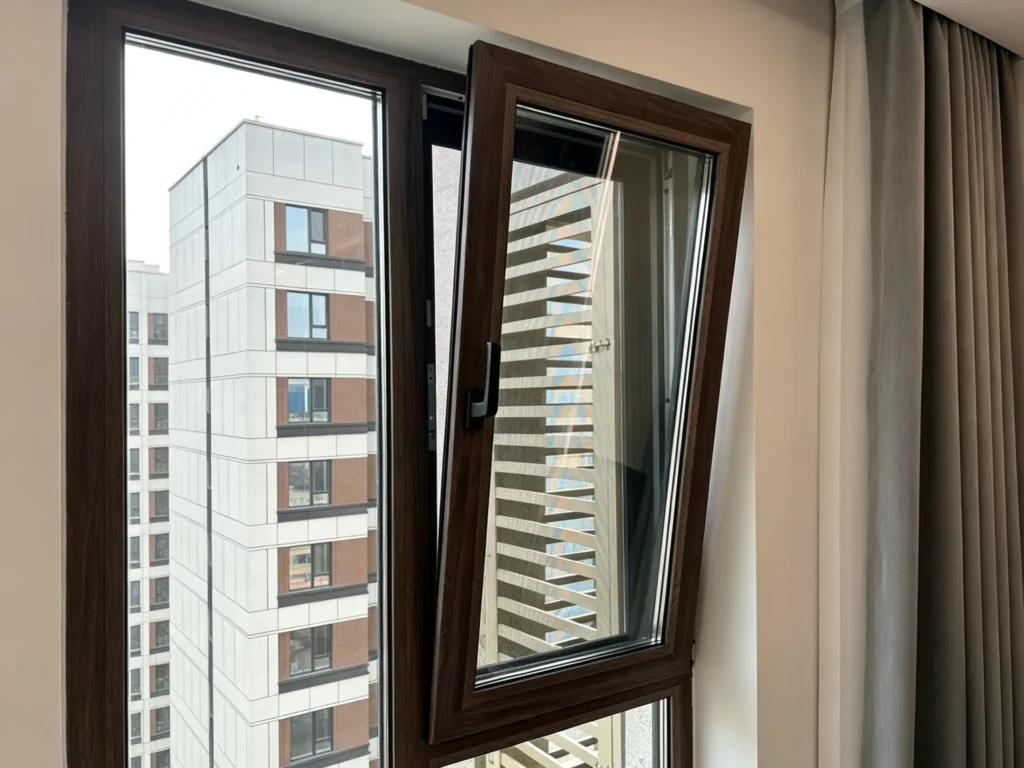
Tilt-and-turn windows are a European-style hinged window system that provides two opening functions.
They can:
- Tilt inward from the top for ventilation
- Turn inward like a casement window for full opening
Advantages
Flexible ventilation control
The tilt position allows continuous airflow without fully opening the window.
Easy cleaning
The inward-opening design makes exterior glass easier to access.
Enhanced functionality
They combine ventilation, security, and convenience in one system.
Benefits of Hinged Windows
Hinged windows remain popular because their opening mechanism provides several advantages compared with other window styles.
1. Excellent Ventilation
One of the biggest benefits of hinged windows is their large opening area.
Because the sash can open widely, they allow:
- Increased airflow
- Faster air exchange
- Better indoor comfort
This makes hinged windows suitable for rooms where ventilation is important.
2. Better Energy Efficiency
A well-designed hinged window can provide excellent thermal performance.
When closed, the sash presses firmly against the frame, creating a tight seal that helps reduce:
- Air leakage
- Heat loss during winter
- Heat gain during summer
Energy performance depends on factors including:
- Frame material
- Glass type
- Seal design
- Installation quality
3. Larger Glass Area and Better Views
Many hinged windows use slim frame designs that maximize the visible glass area.
Benefits include:
- More natural light
- Wider outdoor views
- Modern architectural appearance
This is especially important for contemporary residential projects where large glass surfaces are preferred.
4. Improved Security
Hinged windows can provide strong security performance when combined with:
- Multi-point locking systems
- Durable hardware
- Strong frame materials
Because the sash locks tightly into the frame, many hinged designs offer reliable protection.
5. Flexible Design Options
Hinged windows can be customized according to different project requirements.
Options include:
- Different opening directions
- Various frame colors
- Multiple glass configurations
- Custom dimensions
- Different hardware systems
This flexibility makes them suitable for both standard homes and customized architectural projects.
Disadvantages of Hinged Windows
Although hinged windows offer many benefits, they are not suitable for every application.
Understanding their limitations helps homeowners and designers choose the right solution.
1. Require Opening Clearance
Because hinged windows swing outward or inward, they require enough space for operation.
Outward-opening windows may need consideration for:
- Exterior walls
- Walkways
- Landscaping
- Building regulations
Inward-opening windows require sufficient interior space.
For areas with limited clearance, sliding windows may be a better option.
2. More Complex Hardware System
Compared with simple sliding windows, hinged windows typically use more mechanical components.
The hardware includes:
- Hinges
- Locks
- Handles
- Multi-point mechanisms
Regular inspection and proper maintenance help ensure smooth operation over time.
3. Potentially Higher Initial Cost
Hinged windows may have a higher initial cost compared with some basic sliding window systems because of:
- More advanced hardware
- More complex manufacturing
- Higher sealing requirements
However, the improved ventilation, energy efficiency, and durability may provide better long-term value.
Hinged Windows vs Sliding Windows: Which One Is Better?
Hinged windows and sliding windows are two common window styles used in residential and commercial buildings. The better choice depends on the project requirements, including ventilation needs, available space, design preferences, and performance expectations.
| Feature | Hinged Windows | Sliding Windows |
|---|---|---|
| Opening method | Swing inward or outward using hinges | Slide horizontally along tracks |
| Ventilation | Larger opening area for airflow | Moderate ventilation depending on opening size |
| Sealing performance | Generally excellent due to compression sealing | Depends on track and sealing design |
| Space requirements | Needs clearance for opening | Space-saving design |
| Maintenance | Requires hardware inspection | Tracks may require regular cleaning |
| Design style | Suitable for modern and traditional designs | Common for wide openings and simple layouts |
When to Choose Hinged Windows
Hinged windows are a good choice when you need:
Maximum ventilation
Rooms that require strong airflow, such as bedrooms, kitchens, and living areas, can benefit from the larger opening area.
Better insulation performance
For projects where energy efficiency is important, hinged windows can provide strong sealing performance when combined with quality frames, glazing, and weather seals.
Modern architectural appearance
Hinged windows work well with contemporary designs because they can incorporate:
- Slim profiles
- Large glass areas
- Minimal frame appearance
When Sliding Windows May Be Better
Sliding windows may be more suitable when:
- Exterior opening space is limited
- A wider horizontal window configuration is needed
- Easy operation is a priority
- The project requires a simpler window system
For example, sliding windows are often used in areas such as:
- Balconies
- Large wall openings
- Spaces facing walkways
Why Choose Aluminum Hinged Windows?
1. Slim Profiles with Larger Glass Areas
Aluminum has a high strength-to-weight ratio, allowing manufacturers to create slimmer window frames without compromising structural performance.
This provides:
- More natural light
- Wider views
- Cleaner architectural appearance
For modern homes and commercial projects, slim aluminum hinged windows can create a balance between aesthetics and performance.
2. Strong Structural Performance
Large window openings require frames that can support heavier glass units while maintaining stability.
Aluminum window systems provide:
- High strength
- Excellent dimensional stability
- Resistance to deformation
This makes them suitable for:
- Large residential windows
- High-rise buildings
- Custom architectural projects
3. Excellent Durability and Low Maintenance
Compared with materials that may require frequent maintenance, aluminum windows offer long-term reliability.
Aluminum frames are resistant to:
- Moisture
- Corrosion
- UV exposure
- Temperature changes
With proper surface finishing, aluminum hinged windows can maintain their appearance for many years.
4. Flexible Customization Options
Every building project has different requirements.
Custom aluminum hinged windows can be designed according to:
- Window dimensions
- Opening configuration
- Glass specification
- Color and finish
- Hardware selection
- Thermal performance requirements
This makes aluminum windows suitable for both renovation projects and new construction.
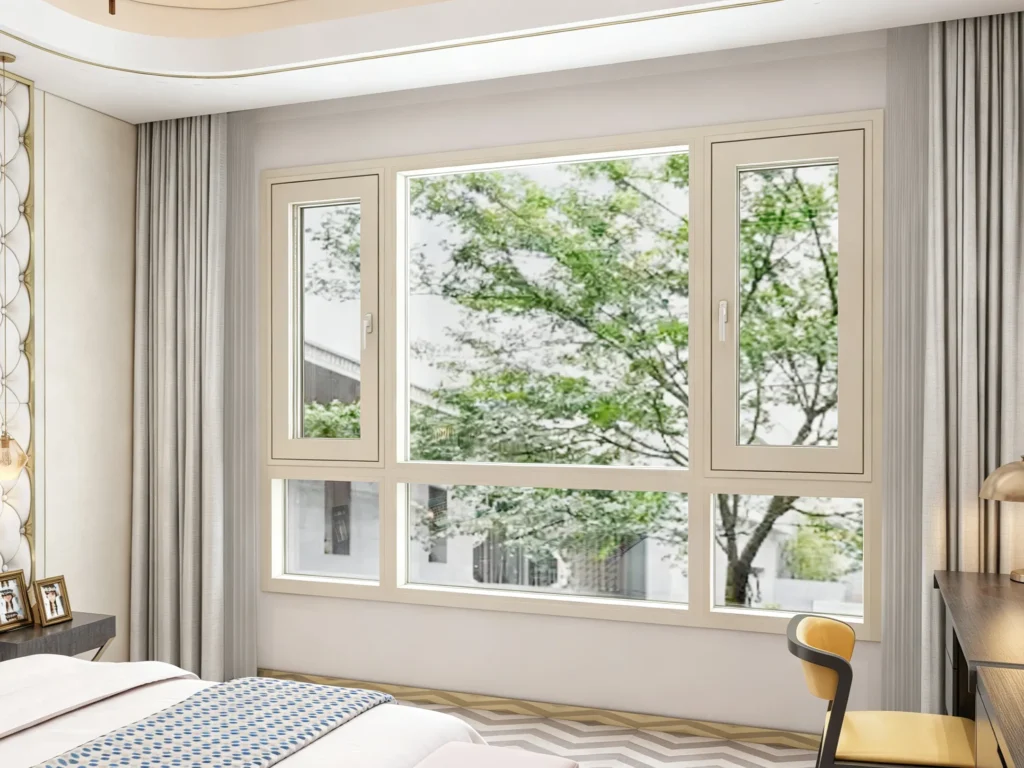
How to Choose the Right Hinged Windows
Selecting the right hinged window requires more than choosing an opening style. The entire window system should match the building environment and performance requirements.
1. Consider Your Climate Conditions
Climate affects window performance requirements.
For example:
Cold climates
Consider:
- High-performance glazing
- Strong thermal insulation
- Multiple sealing layers
Hot climates
Consider:
- Low-E glass
- Solar control performance
- Heat-resistant finishes
Coastal areas
Consider:
- Corrosion-resistant materials
- Durable surface treatments
- High-quality hardware
2. Choose the Appropriate Glass System
Glass plays an important role in window performance.
Common options include:
Double Glazing
Provides improved:
- Thermal insulation
- Sound reduction
- Indoor comfort
Triple Glazing
Used for projects requiring higher insulation performance.
Low-E Glass
Helps control solar heat transfer while improving energy efficiency.
The ideal glass configuration depends on:
- Local climate
- Building orientation
- Energy requirements
- Project standards
3. Evaluate Frame Quality
The frame affects:
- Structural strength
- Thermal performance
- Durability
- Appearance
Important factors include:
- Aluminum profile design
- Thermal break technology
- Surface treatment
- Drainage system
A high-quality frame should work together with the glass and hardware system to create reliable long-term performance.
4. Check Hardware Performance
Hardware directly affects daily operation.
Quality hardware improves:
- Opening smoothness
- Locking reliability
- Security
- Service life
Important components include:
- Hinges
- Handles
- Locking points
- Restrictors
5. Work With an Experienced Window Manufacturer
A reliable manufacturer can help optimize:
- Window design
- Material selection
- Glass configuration
- Performance requirements
- Installation compatibility
For custom projects, manufacturing capability is especially important because standard window solutions may not always meet architectural requirements.
FAQs
Casement windows are one type of hinged window. Hinged windows are a broader category that includes casement windows, awning windows, and tilt-and-turn windows.
Yes. Hinged windows can provide excellent energy efficiency because the sash closes tightly against the frame, reducing air leakage. Performance also depends on the glass, frame design, and installation quality.
Neither option is always better. Hinged windows usually provide better ventilation and sealing performance, while sliding windows save space and are easier to operate in areas with limited clearance.
Casement windows generally provide the best ventilation because they can open widely and allow more airflow compared with many other window styles.
Yes. Aluminum hinged windows are highly durable, resistant to weather exposure, and require minimal maintenance when manufactured with proper finishes and hardware systems.
Yes. Hinged windows can be customized in terms of size, opening style, glass type, frame color, hardware, and performance requirements.
Conclusion
Hinged windows are a versatile window solution that combines excellent ventilation, strong sealing performance, and flexible design possibilities. From traditional casement windows to modern aluminum hinged systems, they can meet different residential and architectural requirements.
When selecting hinged windows, consider not only the opening style but also the frame material, glazing system, hardware quality, and manufacturer experience. A well-designed window system can improve comfort, energy efficiency, and long-term building performance.
For modern projects requiring durability, slim designs, and customization flexibility, aluminum hinged windows provide a reliable solution that balances function and architectural aesthetics.
Looking for the right hinged window solution for your project? Contact wang@gddlsn.com today to discuss your custom aluminum window requirements and get expert support.