
French windows and casement windows are both popular choices for residential projects because they provide excellent ventilation, natural light, and elegant appearance. However, they differ significantly in design, opening style, functionality, and architectural impact.
Understanding these differences can help homeowners, architects, and builders choose the right window style for their projects.
What Are French Windows?
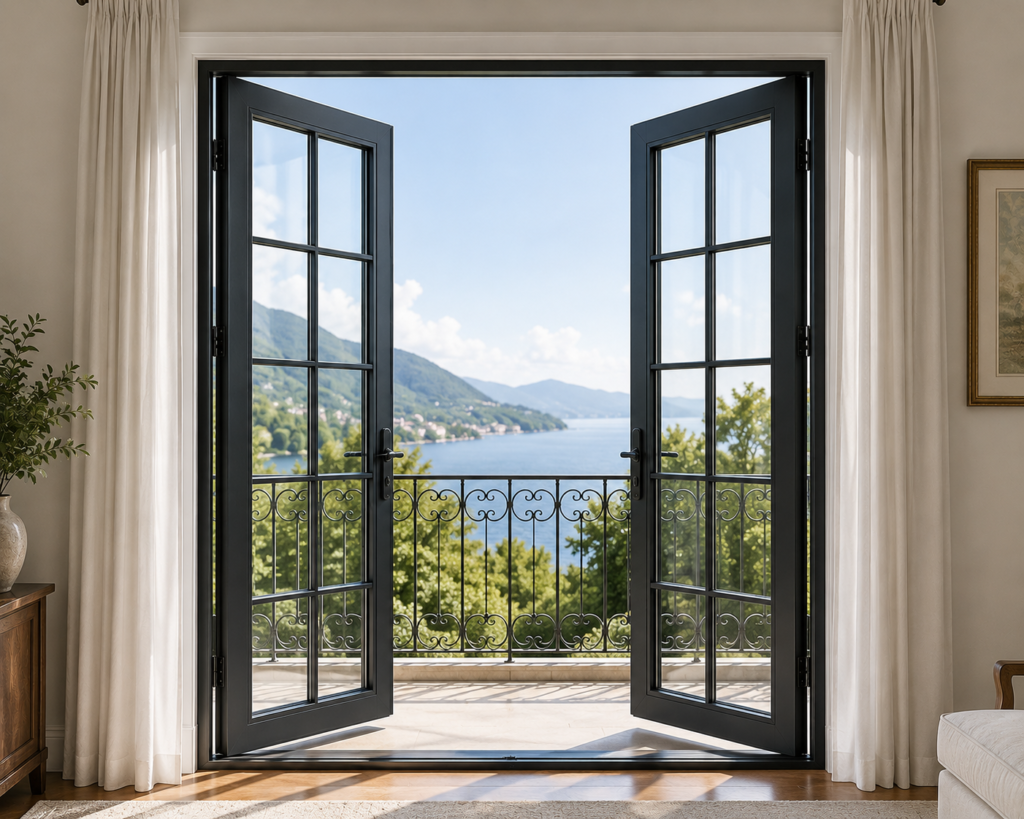
French windows are large double-opening windows that usually extend close to the floor. They feature two window panels that open outward or inward from the center, creating a wide and unobstructed opening.
French windows are often associated with classic European architecture and are commonly used in:
- Balconies
- Patios
- Garden-facing rooms
- Luxury residential projects
Because of their larger opening area, French windows create a strong connection between indoor and outdoor spaces.
What Are Casement Windows?
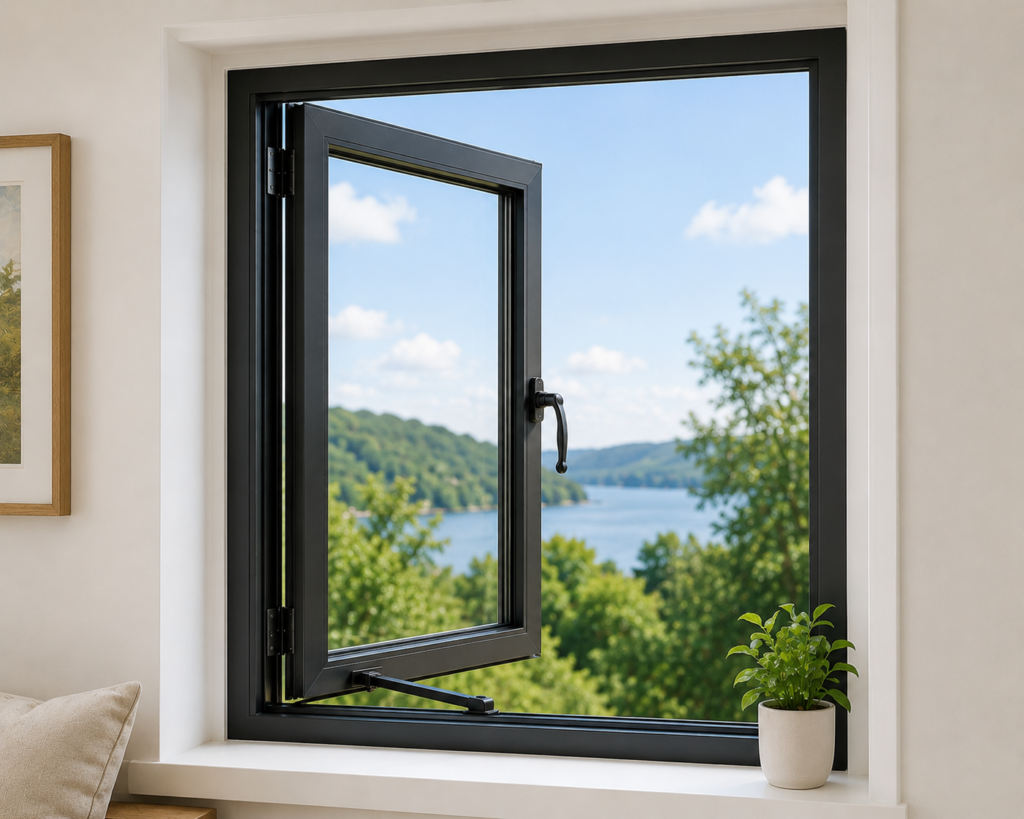
Casement windows are side-hinged windows that open outward like a door. They can be operated with a crank handle or by pushing the sash outward manually.
Casement windows are widely used in modern homes because they are practical, energy-efficient, and suitable for many room types.
They are commonly installed in:
- Bedrooms
- Kitchens
- Bathrooms
- Living rooms
French vs. Casement Windows: Key Differences
| Feature | French Windows | Casement Windows |
|---|---|---|
| Opening Style | Two panels open from the center | Single or paired side-hinged sash |
| Size | Usually larger and taller | Generally smaller and more compact |
| Ventilation | Wide opening with maximum airflow | Excellent directional airflow |
| Appearance | Elegant and architectural | Simple and functional |
| Common Applications | Balconies, patios, luxury homes | General residential use |
| Space Connection | Strong indoor-outdoor connection | Primarily for ventilation and light |
| Cost | Usually higher | Typically more affordable |
Performance Comparison
| Performance Factor | French Windows | Casement Windows |
|---|---|---|
| Energy Efficiency | Good with quality sealing systems | Excellent air-tight sealing |
| Ventilation | Maximum airflow with large opening | Strong directional airflow |
| Weather Resistance | Good structural performance | Excellent wind and rain resistance |
| Security | Secure with multi-point locks | Highly secure locking systems |
| Ease of Operation | Better for larger openings | Easier daily operation |
| Maintenance | Larger hardware systems may require more maintenance | Simpler and easier to maintain |
| Natural Light | Excellent due to larger glass area | Very good depending on size |
Which Style Provides Better Ventilation?
Both window types offer excellent ventilation because they open outward fully.
French windows create a much larger opening area, making them ideal for spaces that require maximum airflow and openness.
Casement windows are highly effective at catching side breezes, especially in smaller rooms. Their sash can direct airflow into the home more efficiently than many other window styles.
Appearance and Architectural Style
French windows are often chosen for their luxurious and elegant appearance. They can make a room feel larger, brighter, and more connected to outdoor spaces.
They work particularly well in:
- European-style homes
- Villas
- Luxury apartments
- Garden-facing spaces
Casement windows have a cleaner and more practical appearance. They fit easily into both modern and traditional architecture and are available in a wide range of sizes and configurations.
Energy Efficiency
Casement windows are generally considered one of the most energy-efficient window types because the sash presses tightly against the frame when closed.
French windows can also provide excellent insulation when manufactured with high-quality frames and sealing systems, although their larger size may require stronger hardware and glazing systems.
The actual energy performance depends on:
- Frame material
- Glass configuration
- Sealing quality
- Installation quality
rather than the style alone.
If you want a dramatic architectural effect and a stronger connection between indoor and outdoor spaces, French windows are often the better choice.
If you need a practical, versatile, and energy-efficient window solution for everyday residential use, casement windows are usually the more functional option.
Final Thoughts
French windows and casement windows each offer unique advantages. French windows focus more on elegance, openness, and architectural impact, while casement windows prioritize practicality, ventilation, and energy efficiency.
The right choice depends on your project style, space requirements, and functional needs.
At Delanshini Doors and Windows, we provide customized aluminum French windows and casement window solutions for residential and commercial projects worldwide.
For inquiries and custom solutions, please contact: wang@gddlsn.com