
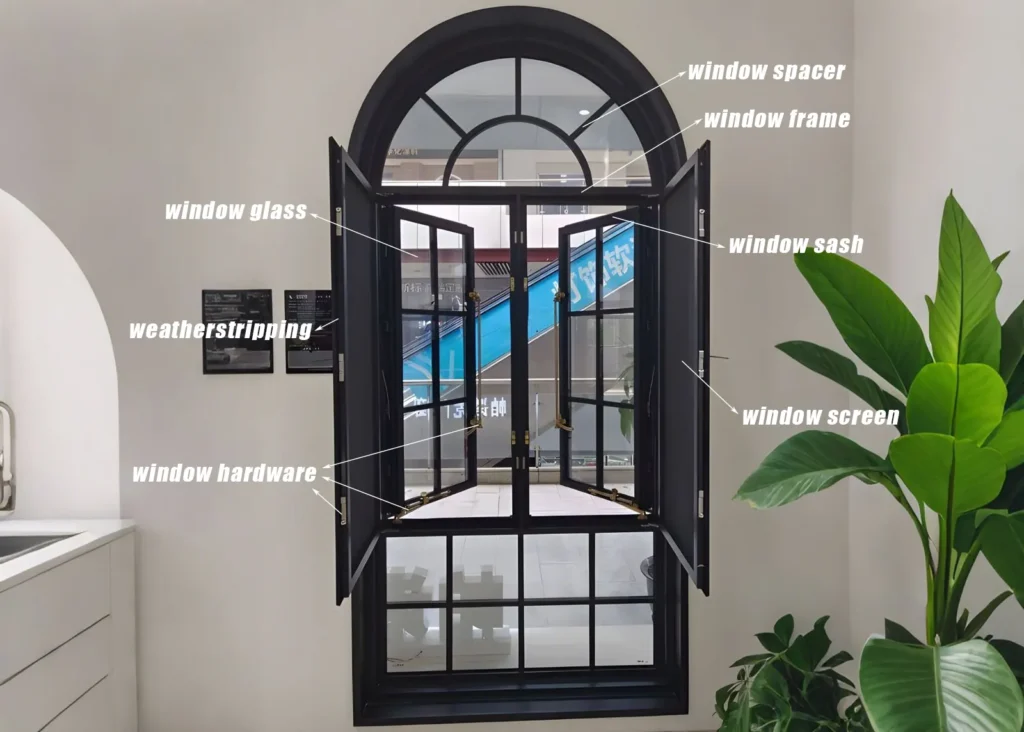
A window consists of several key components, including the frame, sash, glass, hardware, seals, and supporting elements. Each part plays an important role in determining a window’s durability, energy efficiency, weather resistance, security, and overall performance.
Understanding the different parts of a window helps homeowners, architects, builders, and buyers make better decisions when selecting or replacing windows. Instead of viewing a window as a simple glass opening, it is important to understand how each component works together to create a high-performance window system.
Main Parts of a Window
Although window designs vary depending on the style and material, most modern windows share several essential components.
1. Window Frame
The window frame is the main structural component that surrounds and supports the glass. It holds the entire window system together and connects the window to the building structure.
The frame directly affects:
- Structural strength
- Energy efficiency
- Durability
- Maintenance requirements
- Overall appearance
Common window frame materials include:
Aluminum
Aluminum frames are widely used in modern residential and commercial buildings because of their strength, slim profiles, and design flexibility.
Advantages include:
- High structural strength
- Ability to support large glass areas
- Slim and modern appearance
- Excellent durability
- Low maintenance requirements
For aluminum windows, thermal performance depends heavily on the frame design. High-quality aluminum windows often use thermal break technology to reduce heat transfer between the interior and exterior sides of the frame.
Vinyl (uPVC)
Vinyl windows are popular in residential applications because they offer good insulation performance and require minimal maintenance.
Advantages include:
- Good thermal insulation
- Cost-effectiveness
- Resistance to moisture and corrosion
- Easy maintenance
Fiberglass
Fiberglass frames provide excellent durability and dimensional stability.
Advantages include:
- Strong resistance to temperature changes
- Long service life
- Good energy efficiency
- Low expansion and contraction
Wood
Wood frames provide a traditional appearance and natural insulation properties.
Advantages include:
- Classic aesthetic appeal
- Good insulation
- Suitable for historic and luxury homes
However, wood windows generally require more maintenance compared with aluminum, vinyl, or fiberglass options.
2. Window Sash
The sash is the movable part of a window that holds the glass panel.
Depending on the window type, the sash may:
- Open outward
- Open inward
- Slide horizontally
- Slide vertically
- Tilt for ventilation or cleaning
For example:
- Casement windows use a hinged sash that opens outward.
- Sliding windows use sashes that move along a track.
- Double-hung windows contain upper and lower movable sashes.
The quality of the sash affects:
- Window operation
- Air tightness
- Glass stability
- Long-term performance
A well-designed sash should move smoothly while maintaining a tight seal when closed.
3. Window Glass and Glazing
Glass is one of the most important parts of a window because it directly affects:
- Natural lighting
- Energy efficiency
- Noise reduction
- Solar heat control
- Safety
Modern windows usually use insulated glass units (IGUs), which consist of two or more glass panes separated by a spacer.
Single-Pane Glass
Single-pane windows contain only one layer of glass.
While they are simple and inexpensive, they provide limited:
- Thermal insulation
- Noise reduction
- Energy efficiency
They are less common in modern high-performance window systems.
Double-Pane Glass
Double-pane windows contain two glass panes with an insulating space between them.
Benefits include:
- Better temperature control
- Reduced energy loss
- Improved sound insulation
- Greater indoor comfort
Triple-Pane Glass
Triple-pane windows add another layer of glass and insulating space.
They are commonly used in:
- Cold climates
- High-performance buildings
- Energy-efficient homes
Low-E Glass Coating
Low-emissivity (Low-E) coatings are thin layers applied to glass surfaces to control heat transfer.
They help:
- Reduce unwanted solar heat gain
- Keep indoor heat inside during winter
- Improve overall energy efficiency
4. Window Spacer
The spacer is the component placed between glass panes in an insulated glass unit.
Its main functions include:
- Maintaining the correct distance between glass panes
- Improving insulation performance
- Preventing moisture from entering the glass unit
Traditional spacers were often made from aluminum, while modern high-performance windows commonly use warm-edge spacer systems designed to reduce heat transfer.
A high-quality spacer contributes to:
- Better thermal performance
- Reduced condensation
- Longer glass unit lifespan
5. Window Hardware
Window hardware includes the mechanical components that control opening, closing, locking, and positioning.
Common hardware components include:
- Handles
- Locks
- Hinges
- Operators
- Rollers
- Tracks
- Multipoint locking systems
Although hardware may appear small compared with the frame and glass, it has a major impact on:
- Security
- Ease of operation
- Weather sealing
- User experience
High-quality hardware allows windows to operate smoothly for many years while maintaining proper sealing performance.
6. Weatherstripping and Seals
Weatherstripping refers to sealing materials installed around moving parts of a window to prevent air and water infiltration.
These components help protect against:
- Drafts
- Rain penetration
- Dust
- Outdoor noise
A window’s overall performance depends not only on the glass and frame but also on how effectively the sealing system works.
Poor-quality seals can result in:
- Air leakage
- Higher energy costs
- Moisture problems
- Reduced comfort
For this reason, professional window manufacturers pay close attention to sealing design during engineering and production.
7. Window Screen
A window screen is installed on the exterior or interior side of a window opening to allow ventilation while preventing insects from entering.
Common screen materials include:
- Fiberglass mesh
- Aluminum mesh
- Stainless steel mesh
Screens are especially common in:
- Casement windows
- Sliding windows
- Double-hung windows
While screens do not directly affect window insulation, they improve usability by allowing homeowners to enjoy fresh air without compromising indoor comfort.
Exterior Parts of a Window
Besides the main components such as the frame, sash, and glass, a window also includes several exterior elements that help protect the building from weather exposure and improve long-term performance.
These components are especially important because the exterior side of a window must continuously withstand:
- Rain
- Wind pressure
- Temperature changes
- UV exposure
- Moisture
8. Window Head
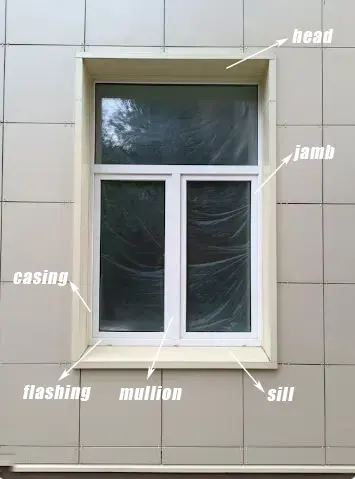
The head is the horizontal section located at the top of a window frame.
Its main functions include:
- Supporting the upper part of the window structure
- Helping direct water away from the opening
- Maintaining the overall stability of the window system
A properly designed head helps prevent water from collecting above the window and entering the building.
In some window systems, additional flashing or drainage designs are integrated around the head area to improve weather resistance.
9. Window Jamb
The jamb refers to the vertical sides of the window frame.
A window has two jambs:
- Left jamb
- Right jamb
The jambs provide structural support for the sash and help maintain alignment during operation.
The quality of the jamb design affects:
- Window stability
- Opening and closing performance
- Air tightness
- Installation accuracy
For large aluminum windows, stronger jamb structures are often required because larger glass panels create higher structural demands.
10. Window Sill
The sill is the horizontal bottom section of a window frame.
It serves several important purposes:
- Supports the lower part of the window
- Directs water away from the opening
- Helps prevent moisture intrusion
Modern window sills are often designed with:
- Sloped surfaces
- Drainage channels
- Weep holes
These features allow accumulated water to flow outside instead of entering the building.
A well-designed sill is especially important for areas with heavy rainfall or humid climates.
11. Window Mullion
A mullion is a structural element that separates two or more window units.
It can be used to:
- Combine multiple windows into one larger configuration
- Provide additional structural support
- Create specific architectural designs
Mullions are commonly seen in:
- Large commercial buildings
- Curtain wall systems
- Custom residential designs
Unlike decorative grids placed on glass surfaces, mullions are actual structural components of the window system.
12. Window Casing
Casing is the decorative or protective trim installed around the window opening.
It covers the transition between the window frame and the surrounding wall.
Functions include:
- Improving appearance
- Covering installation gaps
- Creating a finished interior or exterior appearance
Casing styles vary depending on:
- Architectural style
- Building design
- Material preference
Traditional homes may use wider decorative casing, while modern buildings often use minimal or concealed designs.
13. Window Flashing
Flashing is a waterproofing component installed around windows to prevent water intrusion.
It works together with:
- Window frame
- Sealants
- Drainage systems
- Building membranes
Proper flashing installation helps prevent common window problems such as:
- Water leaks
- Mold growth
- Wall damage
- Structural deterioration
While flashing is not visible after installation, it plays an essential role in the long-term durability of a window system.
Interior Parts of a Window
The interior side of a window includes components that improve appearance, functionality, and indoor comfort.
14. Window Stool
The window stool is the horizontal surface located at the bottom of the interior window opening.
Many people refer to it as the interior windowsill.
It provides:
- A finished appearance
- A small shelf-like surface
- A transition between the window and interior wall
Window stools are commonly made from:
- Wood
- Composite materials
- Stone
- Decorative trim materials
15. Window Apron
The apron is the decorative trim located below the window stool.
Its main purpose is aesthetic, creating a finished transition between the window and the wall.
While it does not significantly affect window performance, it contributes to the overall interior design.
16. Window Grilles or Decorative Grids
Window grilles are decorative elements placed on or between glass panes to create a divided-light appearance.
Common styles include:
- Colonial grids
- Prairie grids
- Custom patterns
Modern architectural windows often use larger uninterrupted glass areas instead of traditional grids to create cleaner designs and maximize natural light.
How Window Components Affect Overall Performance
A high-performance window is not created by one single component. The frame, glass, hardware, seals, and installation system must work together.
Understanding the relationship between these components helps explain why two windows with similar appearances may perform very differently.
1. Energy Efficiency
Energy performance depends on multiple window components working together.
Important factors include:
- Frame material
- Glass type
- Number of panes
- Low-E coating
- Spacer design
- Weather seals
For example:
A window with high-performance glass but poor frame insulation may still experience significant heat transfer.
Similarly, a strong frame with low-quality glazing may not provide the desired energy performance.
2. Weather Resistance
A window must prevent:
- Rain penetration
- Air leakage
- Moisture accumulation
Key components include:
- Sill design
- Flashing system
- Weatherstripping
- Drainage channels
- Sealants
Professional window manufacturers carefully engineer these areas because water resistance directly affects building durability.
3. Structural Performance
The structural strength of a window depends on:
- Frame material
- Profile design
- Glass thickness
- Hardware system
- Reinforcement methods
This is particularly important for:
- Large-format windows
- High-rise buildings
- Coastal areas
- Wind-exposed locations
Aluminum windows are often selected for these applications because aluminum profiles provide excellent strength-to-weight performance.
4. Security
Security depends on several components working together:
- Strong frames
- Durable hardware
- Multi-point locking systems
- Laminated or reinforced glass options
A secure window system should provide both protection and convenient daily operation.
Important Window Components to Consider When Choosing New Windows
When selecting new windows, many buyers focus only on appearance. However, the internal components often determine long-term performance.
Here are the key factors to evaluate.
1. Frame Design and Material
The frame determines:
- Structural strength
- Maintenance requirements
- Appearance
- Thermal performance
For modern buildings requiring large glass areas and slim profiles, aluminum windows are often preferred because they combine strength with design flexibility.
2. Glass Configuration
Consider:
- Single glazing
- Double glazing
- Triple glazing
- Low-E coatings
- Laminated glass
The right glass configuration depends on:
- Climate
- Energy requirements
- Noise control needs
- Building regulations
3. Hardware Quality
High-quality hardware improves:
- Operation smoothness
- Security
- Window lifespan
For frequently used windows and doors, hardware quality can significantly affect user experience.
4. Sealing and Drainage Design
A good window system should include:
- Multiple sealing layers
- Effective drainage paths
- Weather-resistant materials
These features help maintain performance throughout years of exposure to changing weather conditions.
5. Customization Capability
Not every project can use standard window sizes.
Custom window solutions may require adjustments to:
- Dimensions
- Opening styles
- Colors
- Glass specifications
- Hardware selection
- Performance requirements
For architects, builders, and developers, choosing a manufacturer with customization capabilities can provide greater design freedom.
Aluminum Window Components Explained
Aluminum windows are widely used in modern residential and commercial buildings because of their strength, durability, and design flexibility.
Unlike simple residential window products, aluminum window systems are usually engineered as a combination of multiple components working together.
Aluminum Profile
The aluminum profile forms the main structure of the window frame.
Its design affects:
- Strength
- Appearance
- Glass capacity
- Thermal performance
Modern aluminum systems often use slim profiles to maximize glass areas while maintaining structural stability.
Thermal Break
A thermal break is an insulating barrier placed between the interior and exterior aluminum sections.
Its purpose is to reduce heat transfer through the aluminum frame.
Benefits include:
- Improved energy efficiency
- Better indoor comfort
- Reduced condensation risk
Powder Coating Finish
The surface finish protects aluminum frames from:
- Weather exposure
- Corrosion
- Fading
Powder coating also allows manufacturers to provide different colors and architectural finishes.
Insulated Glass Unit (IGU)
The glass system typically includes:
- Glass panes
- Spacer
- Gas filling
- Sealant
Together, these components determine:
- Thermal performance
- Sound insulation
- Solar control
Hardware System
Aluminum windows require carefully matched hardware components, including:
- Handles
- Hinges
- Locks
- Rollers
The right hardware ensures smooth operation and long-term reliability.
Drainage System
A professional aluminum window system includes drainage channels that allow water to escape while preventing interior leakage.
This is especially important for:
- Heavy rainfall areas
- Coastal buildings
- Commercial projects
Looking for Custom Aluminum Windows?
Understanding window components is the first step toward choosing the right window system. However, the performance of a window ultimately depends on how these components are designed, manufactured, and assembled together.
For residential projects, commercial buildings, and architectural developments, working with an experienced manufacturer can provide greater flexibility in:
- Window dimensions
- Aluminum profile design
- Glass configurations
- Hardware selection
- Surface finishes
- Performance requirements
At DLSN Windows & Doors, we specialize in custom aluminum window and door solutions for international residential and commercial projects. Our team works with architects, builders, developers, and distributors to develop window systems that balance aesthetics, durability, energy efficiency, and project requirements.
Whether you need standard aluminum windows or fully customized solutions, we can provide professional support from design consultation through production and delivery. Need custom aluminum window solutions for your project? Contact wang@gddlsn.com today to discuss your requirements and get a professional recommendation.
FAQs
The main parts of a window include the frame, sash, glass, spacer, hardware, seals, and drainage components. Together, these parts determine the window’s strength, insulation, weather resistance, and usability.
No single component determines window performance. The frame, glass, sealing system, hardware, and drainage design must work together to create a durable and energy-efficient window.
The frame is the fixed structure that surrounds the entire window, while the sash is the movable section that holds the glass and opens or closes.
Aluminum window components determine the strength, appearance, thermal performance, and durability of the entire window system. High-quality aluminum profiles, thermal breaks, glass systems, and hardware work together to improve long-term performance.
Water resistance depends mainly on the sill, flashing system, drainage channels, seals, and proper installation. These components work together to direct water away from the building.
Important factors include frame material, glass configuration, hardware quality, sealing design, energy performance, customization options, and manufacturer experience.