
French doors are one of the most popular choices for modern homes because they combine elegant design, natural light, and practical functionality. Whether used for patios, balconies, living rooms, or entryways, choosing the correct French door size is essential for both appearance and performance.
This guide explains standard French door dimensions, rough opening requirements, measuring methods, and the difference between standard and custom sizes to help homeowners and builders choose the right solution.
What Is the Standard Size of a French Door?
Most standard French doors are 80 inches tall, while widths vary depending on whether the door is single or double. Common standard widths include 36, 48, 60, and 72 inches.
French doors are generally divided into interior and exterior applications, and their dimensions may differ slightly based on usage.
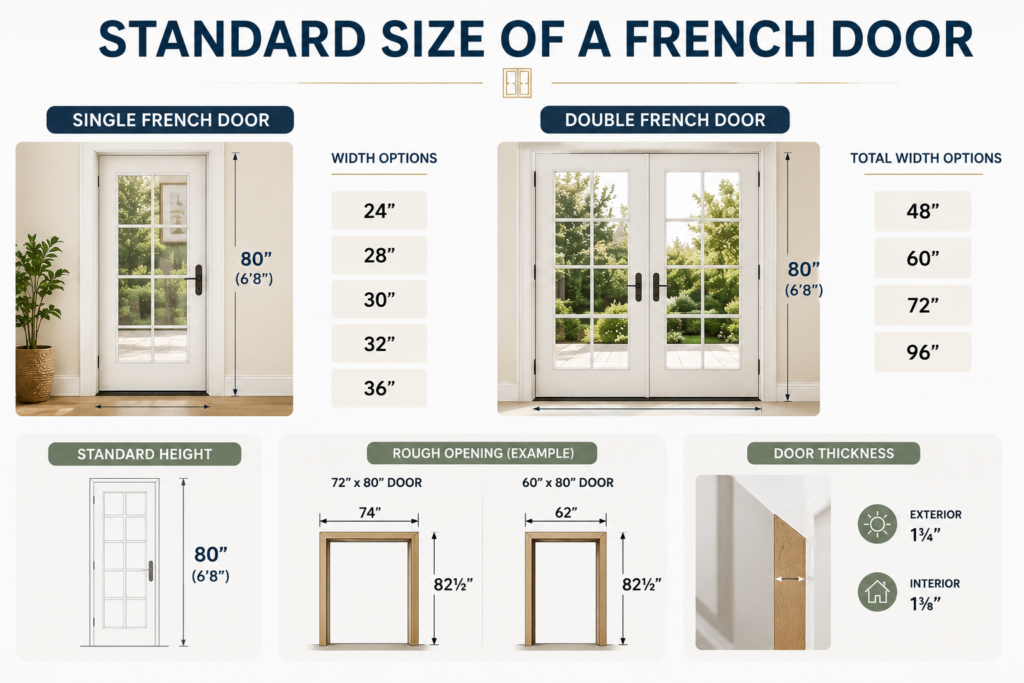
Standard Single French Door Sizes
Single French doors are commonly installed in interior spaces such as home offices, dining rooms, and bedrooms. They are also suitable for narrow patio openings.
Typical single French door sizes include:
| Width | Height |
|---|---|
| 24″ | 80″ |
| 28″ | 80″ |
| 30″ | 80″ |
| 32″ | 80″ |
| 36″ | 80″ |
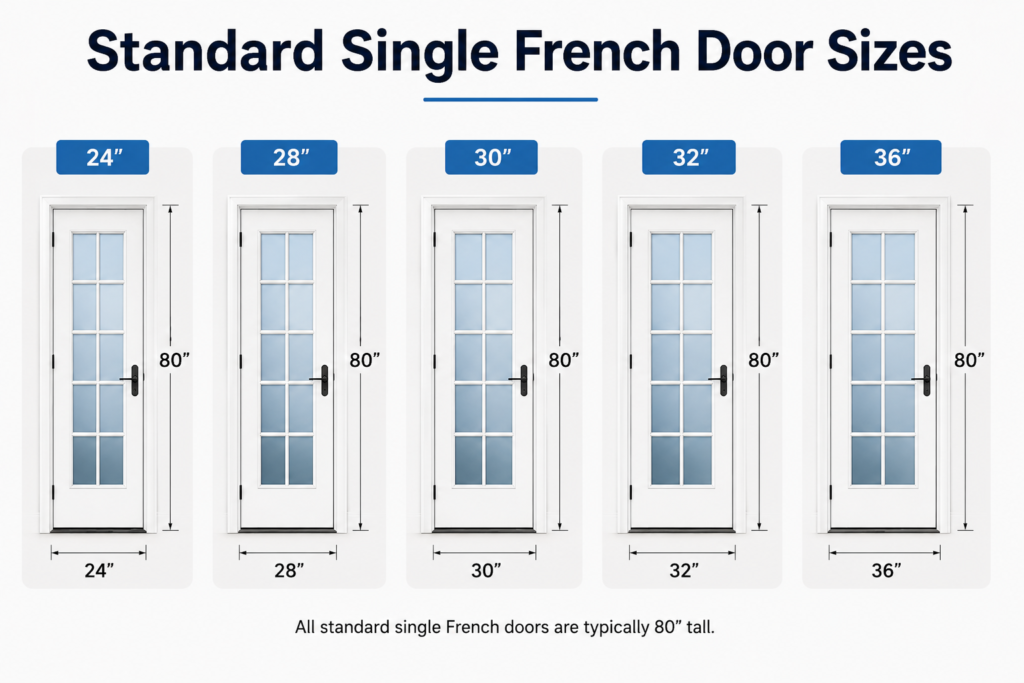
Some manufacturers also offer taller options such as 84-inch and 96-inch heights for homes with higher ceilings.
Standard Double French Door Sizes
Double French doors are the most common configuration for exterior openings. These doors create a wide, open entrance and allow more natural light into the space.
Common double French door sizes include:
| Total Width | Height |
|---|---|
| 48″ | 80″ |
| 60″ | 80″ |
| 72″ | 80″ |
| 96″ | 80″ |
Among these, 72″ × 80″ is one of the most widely used standard sizes for residential patio doors.
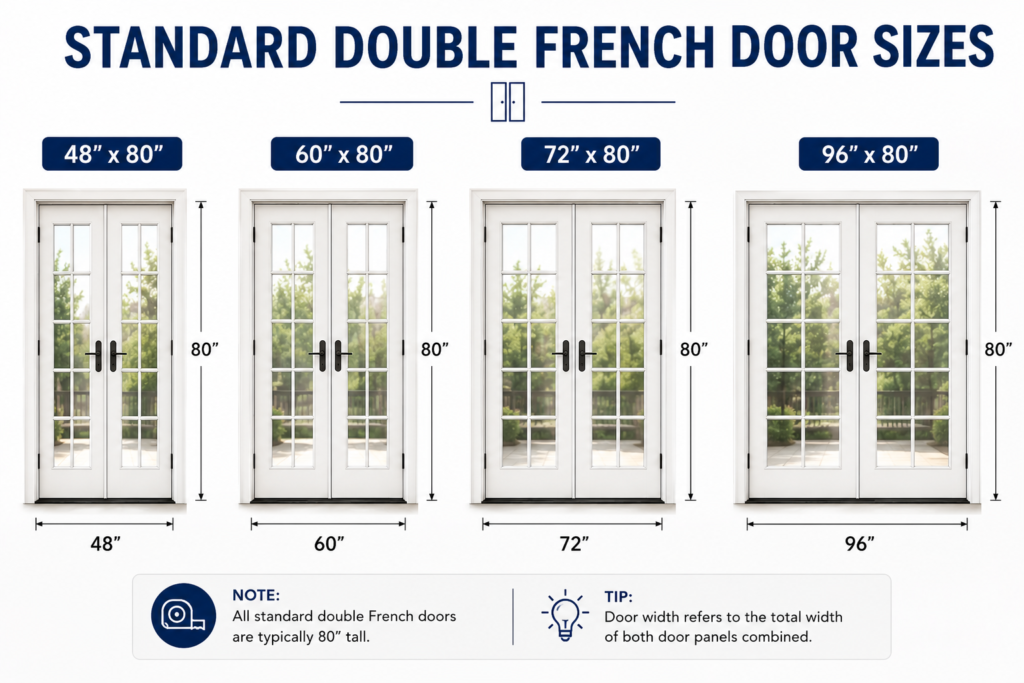
Larger custom French doors can exceed 96 inches in width and may reach heights of 96 inches or more for luxury residential projects.
Exterior French Door Sizes
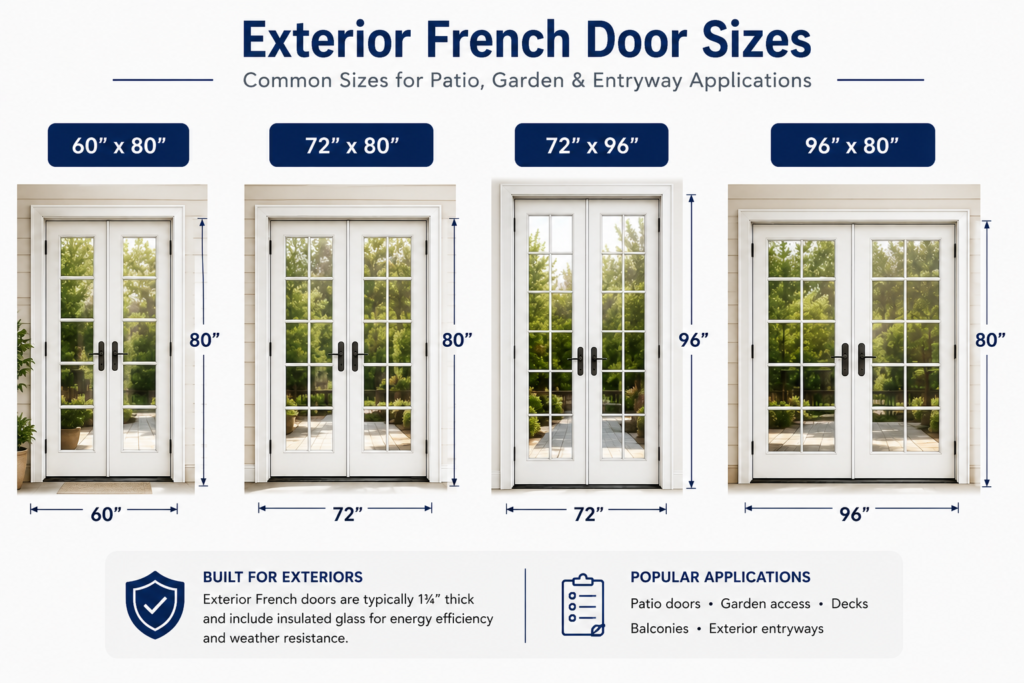
Exterior French doors are designed for patios, gardens, decks, and balconies. Because they must provide insulation, security, and weather resistance, they are usually thicker and heavier than interior models.
Popular exterior French door sizes include:
- 60″ × 80″
- 72″ × 80″
- 72″ × 96″
- 96″ × 80″
Exterior French doors are typically 1-3/4 inches thick and often include insulated or tempered glass.
Interior French Door Sizes
Interior French doors are generally lighter and slimmer. They are commonly used to separate living rooms, offices, kitchens, or dining spaces while maintaining an open visual feel.
Typical interior French door sizes include:
- 48″ × 80″
- 60″ × 80″
- 72″ × 80″
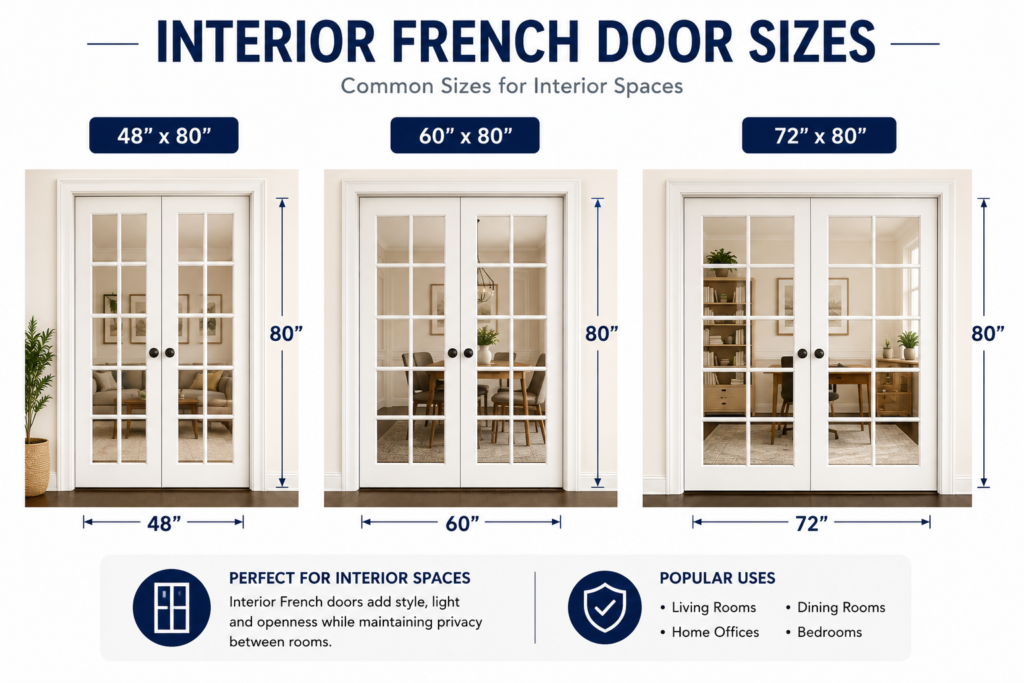
Interior French doors are often available in multiple lite configurations, frosted glass styles, or minimalist modern designs.
Rough Opening Sizes for French Doors
The rough opening is the framed wall opening prepared before the door frame is installed. It must be slightly larger than the actual door size to allow space for leveling, shimming, and insulation.
A common rule is:
- Add approximately 2 inches to the door width
- Add approximately 2.5 inches to the door height
Examples:
| Door Size | Recommended Rough Opening |
|---|---|
| 60″ × 80″ | 62″ × 82.5″ |
| 72″ × 80″ | 74″ × 82.5″ |
| 96″ × 80″ | 98″ × 82.5″ |
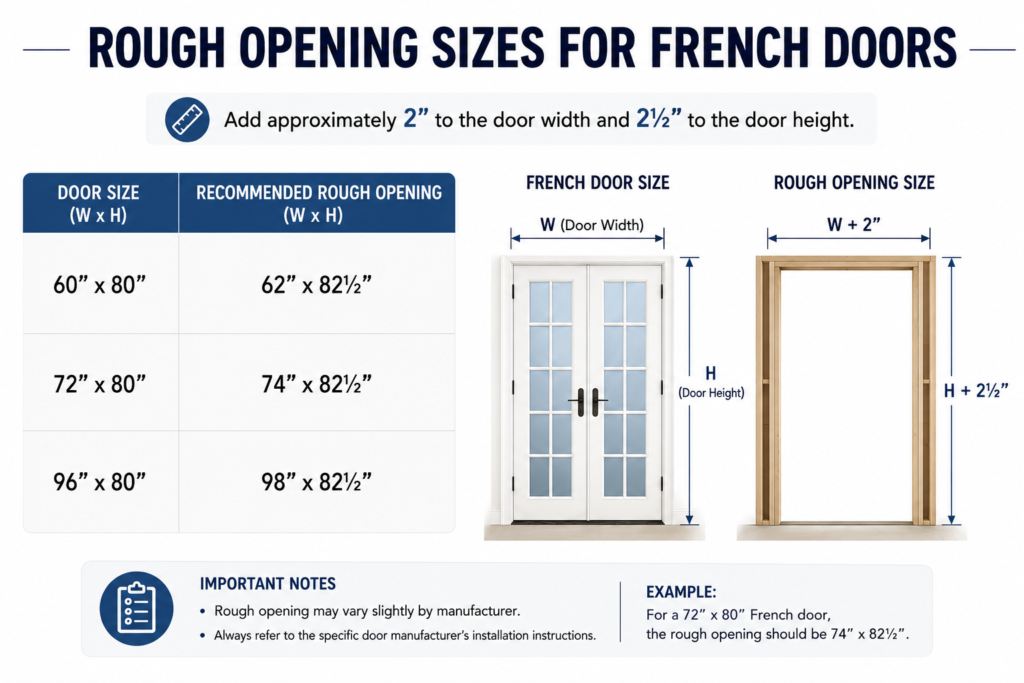
However, exact rough opening requirements may vary depending on the frame system and manufacturer specifications.
How to Measure for French Doors
Proper measurement is critical when replacing or installing French doors. Incorrect measurements can lead to installation issues, poor sealing, or operational problems.
Step 1: Gather Your Tools
You will need:
- Tape measure
- Pencil and notebook
- Level
- Ladder if required
Step 2: Clear the Area
Remove blinds, curtains, or obstacles around the opening to ensure accurate measurements.
Step 3: Measure the Width
Measure the width at the top, middle, and bottom of the opening. Use the smallest measurement.
Step 4: Measure the Height
Measure from the floor to the top of the opening on both sides and in the center. Record the shortest measurement.
Step 5: Measure the Depth
Measure the wall thickness or jamb depth to confirm the frame size compatibility.
Standard vs. Custom French Door Sizes
Both standard and custom French doors have advantages depending on the project requirements.
Standard French Door Sizes
Standard sizes are usually:
- More affordable
- Faster to manufacture
- Easier to install
- Readily available
They are ideal for most residential replacement projects.
Custom French Door Sizes
Custom French doors are suitable for:
- Oversized openings
- Luxury homes
- Unique architectural styles
- Renovation projects with non-standard openings
Custom doors provide greater design flexibility but typically require longer production times and higher costs.
Common Mistakes When Choosing French Door Sizes
One common mistake is measuring only the existing door slab instead of the full opening. Another issue is ignoring the rough opening requirements needed for proper installation.
Homeowners should also consider:
- Door swing direction
- Clearance space
- Frame thickness
- Ceiling height
- Local building codes
Choosing a door that is too large for the available wall structure can create installation and structural problems.
Final Thoughts
French doors are both functional and visually appealing, but selecting the correct size is essential for achieving the best results. Standard French door sizes work well for most homes, while custom solutions provide flexibility for modern architectural designs and large openings.
Before ordering, always verify the rough opening dimensions, wall depth, and installation requirements to ensure a perfect fit and smooth operation.
If you are looking for high-quality standard or custom French doors, Delanshini Doors and Windows provides a wide range of residential and commercial door solutions. For detailed specifications and quotations, please contact: wang@gddlsn.com