
When planning a home renovation or designing a new space, knowing standard window sizes is essential. One question that often comes up is: “Is 24×36 a standard window size?” The answer is yes, and this size is widely used in homes. This guide will explain why 24×36 inches is considered standard, its common applications, and how to choose the right window type for your needs.
Understanding 24×36 Window Dimensions
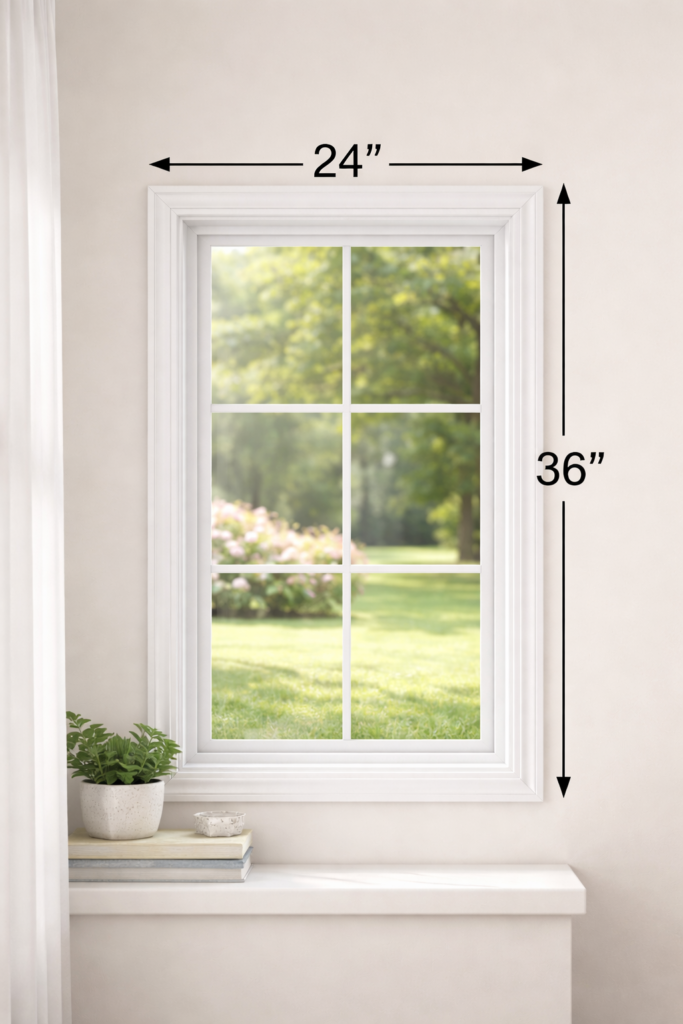
A 24×36 window measures 24 inches wide and 36 inches tall, making it a vertical rectangular window. Vertical windows like this are popular because they provide ample natural light while fitting into narrow wall spaces, which is perfect for areas like bathrooms, hallways, or kitchens.
In the U.S., most window sizes are based on nominal dimensions, which means the actual frame may be slightly larger than the listed size to allow for proper installation within the rough opening.
Is 24×36 a Standard Size?
Yes, 24×36 inches is considered a standard window size. Standard window widths typically range from 24–48 inches, and heights range from 36–72 inches, placing 24×36 right at the lower end of width and height ranges.
This size is ideal for:
- Bathrooms – fits smaller wall spaces while providing natural light
- Kitchens – above sinks or countertops
- Hallways – narrow vertical windows for light without taking up too much wall space
- Bedrooms – as a secondary window or accent window
Discover more:
Is 34×58 a Standard Window Size?
Is 36×60 a Standard Window Size?
Is 36×36 a Standard Window Size?
Casement Window Dimensions – A Complete Guide
Sliding Window Sizes – A Complete Guide
Common Window Types Available in 24×36
Several window styles commonly come in 24×36 dimensions:
- Single-Hung Windows
- The bottom sash moves vertically while the top sash remains fixed
- Offers simple ventilation and classic aesthetics
- Double-Hung Windows
- Both sashes move vertically
- Provides better airflow control and easy cleaning
- Casement Windows
- Hinged on one side and open outward
- Ideal for maximizing ventilation in narrow spaces
- Awning Windows
- Hinged at the top and open outward
- Perfect for bathrooms and kitchens where privacy and airflow are desired
- Fixed or Picture Windows
- Non-operable, mainly used to let in light
- Can be combined with operable windows for design versatility
Standard Window Size Chart
Here is a quick reference chart of common standard window sizes, including 24×36:
| Window Type | Width (inches) | Height (inches) | Notes |
|---|---|---|---|
| Small Vertical Windows | 24 | 36–48 | Ideal for bathrooms or narrow walls |
| 24×36 | 24 | 36 | Standard vertical window, versatile for many rooms |
| Vertical Single-Hung / Double-Hung | 24–36 | 36–72 | Most common in bedrooms, hallways, living rooms |
| Casement / Awning | 24–48 | 36–72 | Opens outward, great for ventilation |
| Horizontal Sliding | 36–72 | 24–36 | Works well for wide, low wall spaces |
| Picture / Fixed | 24–72 | 24–72 | Used to let in light and frame views |
| Bay / Bow Windows | Custom | Custom | Combines multiple windows for a single unit |
Conclusion
In summary, 24×36 inches is a standard and widely used vertical window size. Its compact and versatile design makes it perfect for bathrooms, kitchens, hallways, or as secondary windows in living areas. By understanding standard dimensions and available window types, you can select the right 24×36 window to maximize natural light, enhance aesthetics, and fit your home’s layout.
For expert advice or more information about window sizes and options, contact us at wang@gddlsn.com.