
A hopper window is a bottom-hinged window that opens inward from the top. Its compact design makes it particularly suitable for basements, bathrooms, utility rooms, and other spaces where ventilation and natural light are needed but exterior clearance is limited. Unlike an awning window, which opens outward, a hopper window keeps the sash inside the room when open.
What Is a Hopper Window?
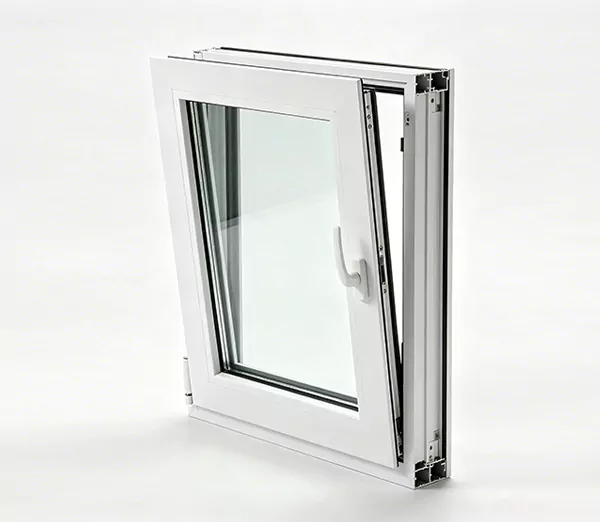
A hopper window is a type of operable window with a horizontal hinge along the bottom of the sash. When opened, the top of the sash tilts inward into the room.
The design is relatively simple, but the opening direction gives hopper windows a specific advantage: they can provide ventilation without requiring space outside the building for the sash to swing outward.
Hopper windows are commonly installed as relatively compact windows, particularly in locations such as basements and bathrooms where ventilation, privacy, and limited wall space are important considerations.
How Does a Hopper Window Work?
The defining feature of a hopper window is its bottom hinge and inward-opening sash.
When the window is closed, the sash sits within the frame. When the operator or latch is released, the upper portion of the sash moves inward while the bottom remains attached to the frame.
This creates an angled opening through which fresh air can enter.
The mechanism can be particularly practical in basement applications because there is no outward-opening sash extending into a window well, walkway, landscaping, or other exterior space. However, the inward movement means that sufficient clearance must be available inside the room.
Where Are Hopper Windows Used?
Hopper windows are generally chosen for spaces where compact ventilation and natural light are more important than creating a large opening.
Basements
Basements are one of the most common applications. Hopper windows can provide ventilation and daylight while working within the limited dimensions and exterior constraints often found around basement window openings.
Bathrooms
A hopper window can provide ventilation and help remove moisture while maintaining a relatively compact opening and a higher level of privacy than a large, low-positioned window.
Utility & Laundry Rooms
Utility rooms and laundry areas often need additional ventilation but have limited wall space. A compact hopper configuration can provide airflow without requiring exterior swing clearance.
Other Small Spaces
Hopper windows can also be considered for attics, workshops, mechanical rooms, and other areas where a smaller operable window is appropriate.
What Are the Advantages of Hopper Windows?
Compact Design
Hopper windows can fit into relatively small or narrow openings, making them useful where a larger window system is impractical.
Good Ventilation
The inward-opening sash provides a direct ventilation path while requiring relatively little exterior clearance.
Easy Interior Access
Because the sash opens into the room, the interior side of the window is generally easy to reach for operation and routine cleaning.
Privacy
Hopper windows are often positioned higher on the wall or used in smaller openings, making them suitable for spaces where ventilation is required without creating a large exposed view.
No Exterior Swing
Unlike outward-opening window styles, a hopper does not require clearance outside the building when opened. This can be useful around basement window wells, walkways, landscaping, or other exterior obstacles.
What Are the Disadvantages of Hopper Windows?
Hopper windows are useful for specific applications, but their opening configuration also creates some limitations.
Requires Interior Clearance
Because the sash opens inward, furniture, fixtures, curtains, or other objects directly in front of the window can interfere with operation.
Not Ideal for Ventilation During Rain
An inward-opening sash does not provide the same rain-shedding effect as an outward-opening awning window. Leaving a hopper open during rain can allow water to enter the room.
Limited Opening Size
Hopper windows are generally used in compact configurations. If a project requires a very large ventilation opening or extensive glazing area, another window style may be more appropriate.
Egress Must Be Considered
A hopper window should not automatically be considered an emergency escape window. Whether a particular hopper configuration satisfies egress requirements depends on its clear opening, dimensions, operation, and applicable local building codes.
Hopper Window vs. Awning Window
Hopper and awning windows are often confused because both use a horizontal hinge and have similar proportions. The key difference is where the hinge is located and which direction the sash opens.
| Feature | Hopper Window | Awning Window |
|---|---|---|
| Hinge | Bottom | Top |
| Opening Direction | Inward | Outward |
| Best For | Basements, bathrooms, utility rooms | Bathrooms, kitchens, upper-level applications |
| Exterior Clearance | Not required | Required |
| Rain Protection When Open | Limited | Better |
| Interior Clearance | Required | Generally not required |
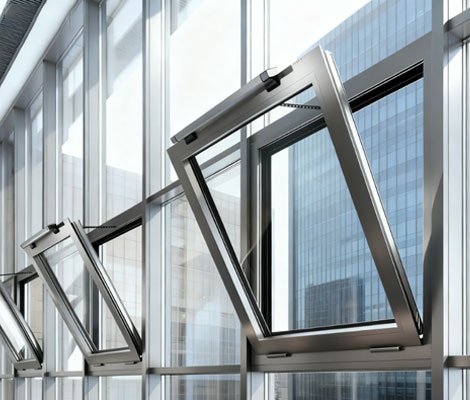
An awning window opens outward from the bottom, allowing the sash to act somewhat like a small canopy over the opening. This makes it better suited to ventilation during light rain. A hopper window does the opposite: it opens inward from the top and is therefore more useful where exterior space is restricted.
In simple terms:
Hopper = opens inward from the top.
Awning = opens outward from the bottom.
The better choice depends on the available space, ventilation requirements, weather exposure, and intended application.
What Materials Are Hopper Windows Made From?
Hopper windows can be manufactured using different frame materials, including aluminum, uPVC, and wood.
The choice of material affects the window’s appearance, structural characteristics, maintenance requirements, thermal performance, and available finishes.
Aluminum Hopper Windows
Aluminum is well suited to projects requiring strong frames, slim profiles, customized dimensions, and a wide range of finishes. Thermal-break aluminum systems can also be combined with suitable glazing to improve thermal performance.
uPVC Hopper Windows
uPVC is commonly used in residential applications and offers low maintenance and inherently low thermal conductivity.
Wood Hopper Windows
Wood can provide a traditional architectural appearance, although it generally requires more maintenance than aluminum or uPVC.
For projects requiring custom dimensions, architectural finishes, larger glazing combinations, or coordinated aluminum door and window systems, aluminum hopper windows can provide greater design flexibility.
What Should You Consider When Choosing a Hopper Window?
The right hopper window should be selected according to the opening, application, performance requirements, and local regulations, rather than size alone.
1. Window Dimensions
Consider the available wall opening and the amount of ventilation and daylight required. Custom dimensions may be necessary for project-specific openings.
2. Opening Clearance
Check the space inside the room before selecting an inward-opening configuration. The sash needs sufficient clearance to open fully.
3. Glazing
Glass selection can affect thermal insulation, solar control, acoustic performance, safety, and appearance. Depending on the project, options may include double glazing, triple glazing, Low-E glass, tempered glass, or laminated glass.
4. Frame Material
Aluminum, uPVC, and wood each offer different combinations of strength, thermal performance, appearance, and maintenance requirements.
5. Ventilation Requirements
Consider how much airflow the room requires and whether the window will be used as the primary ventilation opening or as supplementary ventilation.
6. Egress Requirements
If the window is intended for emergency escape, verify the required clear opening and applicable building code before finalizing the window configuration. A standard hopper window should not be assumed to meet egress requirements.
Are Hopper Windows a Good Choice for Basements?
Yes, when the application matches their design.
Basements are one of the strongest use cases for hopper windows because the inward-opening configuration does not require exterior clearance around a window well. The compact format also works well where the available wall opening is limited.
However, the choice should also consider:
- Required ventilation area
- Natural light requirements
- Interior clearance
- Window well conditions
- Egress requirements
- Glazing and thermal performance
For a basement where emergency escape is required, the window should be selected based on the applicable egress requirements rather than simply choosing a hopper style.
Custom Hopper Windows for Different Projects
Hopper windows do not have to follow one fixed configuration. Depending on the manufacturer and system, dimensions, glazing, hardware, frame material, finish, and other specifications can be customized to suit the project.
For aluminum hopper windows, customization can include:
- Custom window dimensions
- Aluminum profile systems
- Thermal-break configurations
- Double or triple glazing
- Low-E, tempered, or laminated glass
- Hardware and locking systems
- Powder coating and anodized finishes
- Custom colors and architectural finishes
For projects with specific requirements, providing the window schedule, drawings, dimensions, glazing specifications, and performance requirements allows the manufacturer to develop a more suitable configuration.
FAQs
What is a hopper window?
A hopper window is a bottom-hinged window that opens inward from the top. It is commonly used in basements, bathrooms, utility rooms, and other spaces requiring compact ventilation.
Why are hopper windows commonly used in basements?
Their inward-opening design does not require exterior swing clearance, which makes them practical around basement window wells and other restricted exterior spaces.
What is the difference between a hopper and an awning window?
A hopper window is hinged at the bottom and opens inward from the top. An awning window is hinged at the top and opens outward from the bottom.
Are hopper windows good for ventilation?
Yes. Their inward-opening sash provides a direct opening for airflow, making them useful for bathrooms, basements, laundry rooms, and other spaces where ventilation is needed.
Can hopper windows be customized?
Yes. Depending on the window system and manufacturer, hopper windows can be customized in dimensions, glazing, hardware, frame material, colors, and finishes.
Can a hopper window be used as an egress window?
It is generally not recommended. Standard hopper windows are primarily designed for ventilation and natural light, and their inward-opening sash may limit the clear opening needed for emergency escape. If egress is required, a window specifically designed for egress should be considered, subject to local building codes.
Final Thoughts
Hopper windows are designed for a specific purpose: providing ventilation and natural light in compact spaces while opening inward from the top. They are particularly useful for basements, bathrooms, utility rooms, and other applications where exterior clearance is limited.
If you are selecting a hopper window for a project, consider the opening dimensions, interior clearance, glazing, frame material, ventilation needs, and applicable building requirements before choosing the final configuration.
Have questions about custom hopper windows? Email us at wang@gddlsn.com for product specifications, customization options, and project support.